Last Updated: November 24, 2026
Quick Summary
To find reliable tile suppliers, check stock depth, batch consistency, sample accuracy and after-sales terms in writing before you pay a deposit. Reliable tile suppliers can tell you what is in stock, which batch it came from and what happens if you need more.
- Ask for the current quantity held of the exact tile and size, not a general in-stock confirmation.
- Confirm the batch and calibre, as colour and calibration can shift between batches.
- Order the full quantity plus waste in one transaction and keep a spare box or two.
- Get returns, breakage and warranty terms by email so there is a record.
- Order a physical sample of every tile and view it in the room it will be installed in.
How do you find reliable tile suppliers?
Finding reliable tile suppliers means checking stock depth, batch consistency, sample accuracy and after-sales terms before you pay a deposit, not after the tiles land on site. A common pattern in tile buying is that shoppers compare a handful of photos online, order on impulse, then discover halfway through a bathroom that the batch has sold out.
That sequence is avoidable. Below, we set out the questions, checks and comparisons that separate a supplier who can carry a project to completion from one who simply has a nice catalogue. We also flag the points most buying guides skip: reorder risk, breakage terms and how to read a specification sheet properly.
Reliable tile suppliers are defined less by range size than by whether they can tell you, in writing, what is in stock, which batch it came from and what happens if you need more.
Wholesalers, retailers and online sellers compared
Each supplier type solves a different problem, and the right choice depends on your project size and how much certainty you need.
- Wholesalers and trade supply: generally built for volume and repeat orders.
- Showroom retailers: you can see and feel the tile and compare finishes under real light, which helps when you want to judge colour and texture in person.
- Online-only sellers: convenient and often broad in range, but you are judging colour and texture from a screen.
If you are weighing online against in-person, our guide to buying premium wall tiles online covers what to check before you commit. Clearance stock works differently again, with batch sizes and available quantities that need confirming first, which our clearance tiles buying guide explains.
Each supplier type suits a different project need, so weigh them against how much certainty you need.
| Supplier type | Best for | Key difference |
|---|---|---|
| Wholesalers and trade supply | Volume and repeat orders | Built for bulk purchasing |
| Showroom retailers | Judging colour and texture in person | See and feel tiles under real light |
| Online-only sellers | Convenience and broad range | Judging colour and texture from a screen |
The tile supplier checklist for vetting any seller
Most buying guides give you a list of questions. The harder part is knowing what a good answer looks like and how to verify it without taking the supplier’s word for it.
1. Stock depth for the exact tile and size. Ask for the current quantity held, not a general “in stock” confirmation. A tile can be listed as available while only a few square metres remain.
2. Batch and calibre details. Ask which batch the current stock belongs to and whether the supplier records batch numbers against orders.
3. Full specifications on the product page. Look for size, thickness, material, finish, and where applicable wear rating, water absorption and slip resistance classification.
4. Whether product images are the actual tile. Representative images are common and not dishonest, but you need to know which you are looking at.
**5.
6. Collection and delivery terms. Confirm whether you can collect, what delivery covers, and who is responsible for damage in transit. Terms vary widely between suppliers.
7. Matching adhesives, grout and trims. A supplier who stocks the compatible adhesives, grout and trim profiles saves you a second sourcing exercise and reduces the risk of a mismatch.
8. A physical location and business details. Check the Australian Business Number, the registered business name and whether there is a showroom you can visit.
Watch out: a supplier who answers stock and specification questions readily but becomes vague on returns, breakage or warranty is telling you where the risk sits.
Verifying reputation independently. Do not rely only on testimonials published on the supplier’s own site.
Questions to ask a tile supplier before you order
Ask these directly, and ask for answers in writing where the answer affects your budget or your timeline.
- Which batch is this tile from, and how much of that batch do you hold?
- Is the price per square metre or per tile, and does it include GST?
- What is the recommended adhesive and grout for this tile and my substrate?
- What are the terms if tiles arrive broken or the batch is short?
- Can I order a small top-up later, and will it match?
- What is the lead time if the tile is not currently in stock?
- What is the return window, and are opened boxes returnable?
- What does the warranty cover, and what does it exclude?
The batch question matters most. Tiles are fired in runs, and colour and calibration can shift between batches. A supplier who tracks batches properly is a supplier you can reorder from with confidence.
The after-sales questions matter almost as much, and they are the ones buyers most often forget to ask. Breakage in transit, a short delivery, or a change of mind after boxes are opened are all common. Ask what the process is for reporting damage, whether you need to photograph the delivery before signing, and how long a replacement takes. A supplier who can explain the process clearly is easier to deal with when something goes wrong than one who has to check.
On warranty, be specific about what is being warranted. Manufacturing defects in the tile itself are typically covered by the manufacturer, while installation faults are a separate matter and usually fall outside the tile warranty. Ask for the warranty terms in writing and read the exclusions before you order, not after.
Watch out: a verbal assurance that “we’ll sort it out” is not a term. If the returns, breakage or warranty position is not written down, assume it does not exist when you need it.
Ordering tile samples and reading the product page
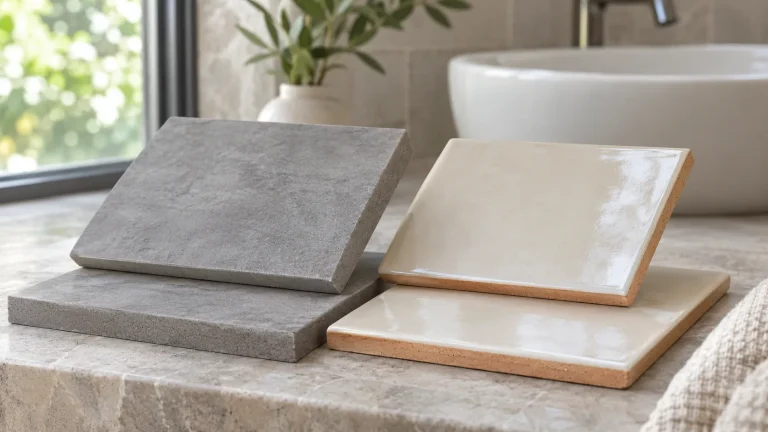
Order a physical sample of every tile you are seriously considering, and view it in the room it will be installed in. Screen colour calibration varies, and a tile that looks warm grey on a laptop can read cool and flat in a north-facing bathroom.
When you read the product page, look past the hero image:
- Size and thickness: confirm actual dimensions, not nominal ones.
- Material: porcelain and ceramic behave differently. Porcelain is denser and generally suits higher-traffic and wet areas; ceramic suits wall applications well.
- Finish: matt, gloss, lappato and textured finishes change both look and maintenance.
- Natural stone versus look-alike: travertine is a natural stone with natural variation and pitting; travertine-look porcelain is a printed reproduction. Neither is better, but they are different products with different care needs.
For floor options across both categories, our floor tiles guide walks through the comparison and how to request a delivery quote.
How to calculate how many tiles you need
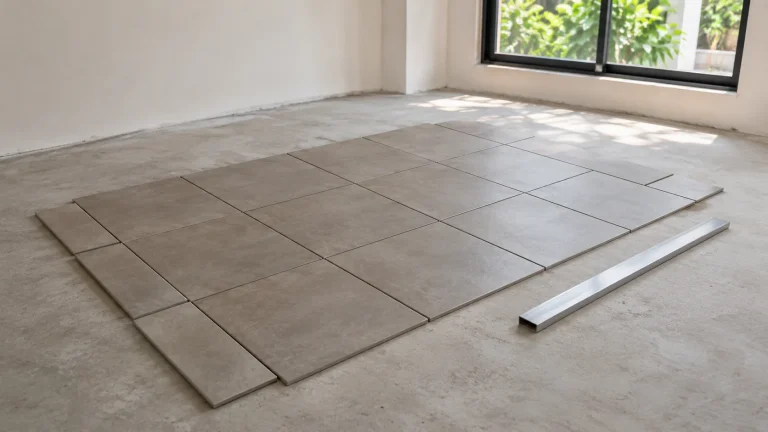
Work out the area first, then add a waste allowance. Waste is not a fixed rule: it depends on your layout, the number of cuts, and how the tile is laid.
Worked example (hypothetical): a bathroom floor 2.4 m by 1.8 m.
- Area = 2.4 × 1.8 = 4.32 m²
- Add a waste allowance for cuts and breakages. A simple rectangular layout might use around 10 per cent; a diagonal or herringbone layout with many cuts needs more.
- At 10 per cent: 4.32 × 1.10 = 4.75 m², so you would order approximately 4.8 m².
Check the tile’s coverage per box on the product page, then round up to whole boxes. Always order your top-up from the same batch at the same time where possible.
Stock, batch consistency and reorder risk
Reorder risk is the single most common cause of stalled projects. Tiles are produced in batches, and once a batch sells through, the next one may differ slightly in colour or calibration. If you buy half a job now and come back in six weeks, matching is not guaranteed.
Three habits reduce that risk:
- Order the full quantity, plus waste, in one transaction.
- Confirm the batch and quantity in stock before paying.
- Keep a spare box or two from the same batch for future repairs.
If you want a structured approach to confirming availability before you buy, our step-by-step guide to checking tile stock covers it in detail.
Visiting the Campbelltown showroom to confirm your choice
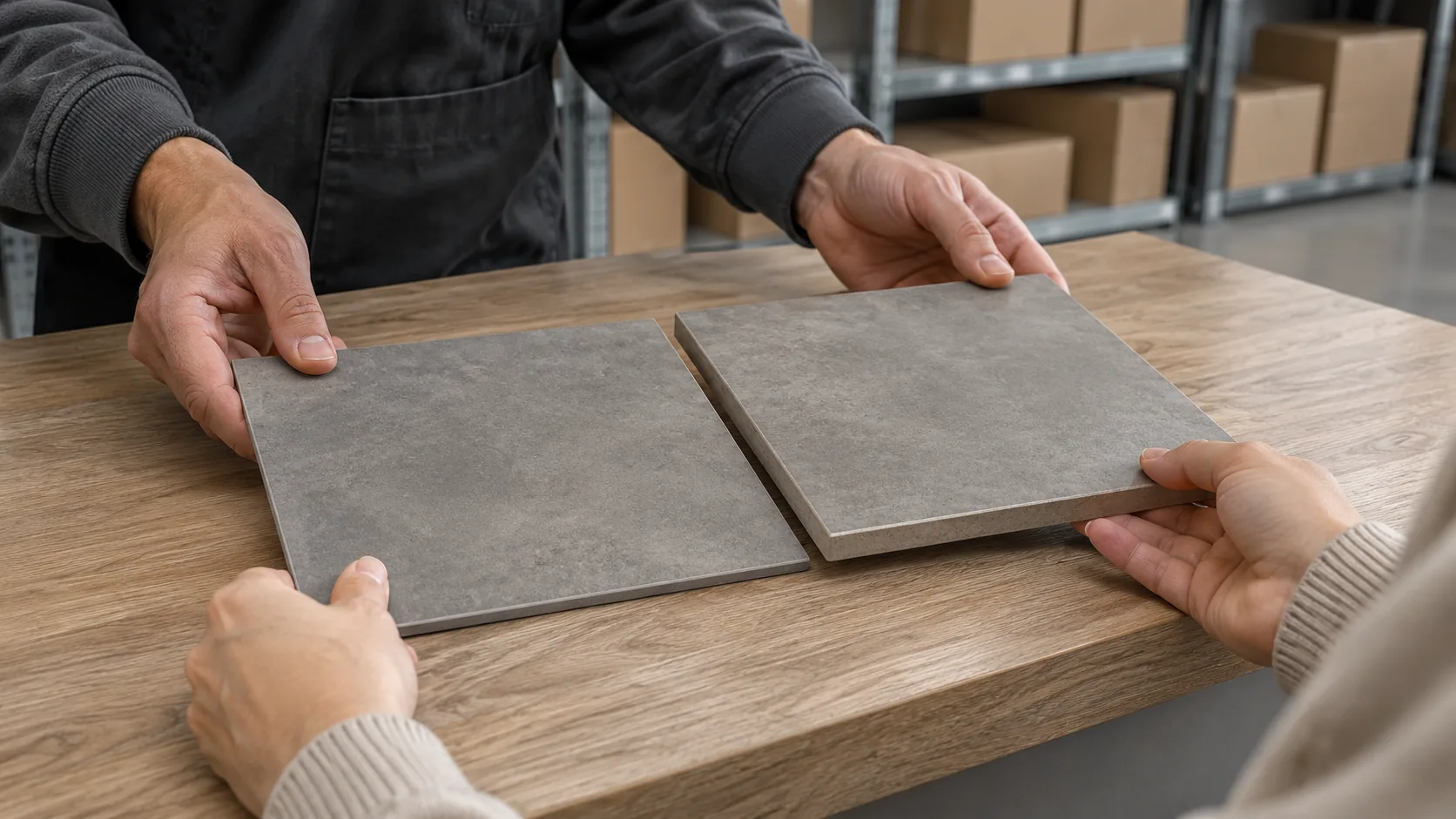
The final check is physical. Comparing two or three shortlisted tiles side by side, under the same light, settles questions that no product page can.

Our 1,000 m² showroom at Campbelltown displays floor, wall, bathroom, outdoor, subway and mosaic tiles, along with porcelain pavers, travertine, pool glass mosaics, adhesives and tiling accessories. You can compare tile finishes in person. Check the showroom location and details before you travel.
Suitability for wet areas, slip resistance and waterproofing depends on the specific product, the location and the applicable requirements. Confirm those details with the manufacturer or a qualified professional before installation.
Comparing tiles online is easy; confirming stock, batch and terms is the part that protects your project. Bargain Factory Tile Outlet can help you work through that side of it, with a 1,000 m² Campbelltown showroom where you can compare tiles in person, and a range covering floor, wall, bathroom, outdoor, subway and mosaic tiles plus adhesives and accessories. Check current stock and product details on the Bargain Factory Tile Outlet website before you choose your tiles.
Frequently Asked Questions
How can I tell if a tile supplier is reliable?
Check four things before ordering. First, whether the product page lists size, finish, material and rectification rather than vague descriptions. Second, whether staff will answer specific questions about stock and batch numbers. Third, whether the returns and breakage terms are written down, not just promised verbally. Fourth, whether the same tile is likely to be available if you need to reorder. A supplier that answers these clearly and in writing is usually easier to deal with than one that only talks about price.
What should I ask a tile supplier before buying?
Ask how many square metres are currently in stock, whether the tiles come from a single batch, and what happens if you need more later. Ask about the returns window and what counts as a fault versus a natural variation. For natural stone, ask whether the batch will match the sample. Also ask whether the price includes GST and delivery, and what access the delivery vehicle needs. Get the answers by email so you have a record if something goes wrong.
Should I order tile samples before placing an order?
Yes, especially for floor tiles and anything going outdoors. Screens distort colour, and a small sample shows you the real finish, edge profile and shade. Ordering tile samples also lets you check the tile against your cabinetry, paint or existing flooring in your own light. Keep the sample and label it with the batch or product code, because that is what you compare the delivery against if a problem arises.
How do I calculate how many tiles I need?
Measure the length and width of each area in metres, multiply them for square metres, and add the areas together. Then add a waste allowance for cuts, breakages and future repairs. The allowance depends on your layout: a simple square room needs less than a diagonal or herringbone pattern with many cut tiles. Show the working to your supplier and ask them to check it. Ordering a few extra tiles is cheaper than finding the batch has sold out later.
What should I do if tiles arrive damaged or differ from the sample?
Photograph the pallet and the affected tiles before you move anything, and check the delivery against the batch and product code on your paperwork. Contact the supplier promptly with the photos and your order number, and ask what they will do about replacement or credit. Keep the damaged tiles until the issue is resolved. If the difference is a shade variation within the batch, ask the supplier to explain the tolerance before you accept a replacement.