Last Updated: November 4, 2026
Quick Summary
Yes, you can buy premium wall tiles online in Australia once you check the specification, order a physical sample and confirm stock, delivery and returns before paying. Rectified edges, consistent glaze and good body density separate quality tiles from cheap imitations that look identical on screen.
- Rectified tiles are cut after firing so edges stay square and allow narrower grout lines.
- Porcelain is denser and more water-resistant, while ceramic is lighter, easier to cut and costs less.
- Measure each wall in metres, total the square metres, then round up to whole boxes.
- Confirm the batch on arrival and check it against your sample before the tiler starts.
- Our 1,000 m² Campbelltown showroom at 20A Blaxland Road lets you compare tiles side by side.
What Separates Premium Wall Tiles From Cheap Ones
Yes, you can buy premium wall tiles online in Australia, but only if you know what separates a quality tile from a cheap imitation. The difference rarely shows in a thumbnail. It shows in the body of the tile, the precision of the edges and how the surface holds up after a few years of cleaning.
At Bargain Factory Tile Outlet, we see the same pattern: shoppers compare two tiles that look identical on a screen, then discover at delivery that one has visible pattern repeats and the other doesn’t. The IndexBox analysis of the wall tiles market projects large-format tiles of 600 x 1,200 mm and above rising from 20-25% of wall tile volume in 2026 to 30-35% by 2035, and those larger formats expose poor quality fast. A warped or badly rectified tile cannot hide across a wide span.
Here is what generally separates the two:
- Rectified edges. Rectified tiles are cut after firing so edges are square and consistent, which lets you use narrower grout lines.
- Face variation. Ranges with more faces per pattern reduce the visible repeat across a wall.
- Glaze consistency. Look for even coverage and no pinholes, which can trap dirt.
- Body density. Denser bodies generally resist moisture and chipping better over time.
Watch out: a low price per square metre can disappear once you add extra wastage for badly sized tiles and wider grout lines. Browse our Wall Tiles range to compare finishes and specifications, and read why factory direct tiles cost less if you want to understand how pricing works without a quality trade-off.
Porcelain Wall Tiles vs Ceramic: Which Should You Buy
Porcelain is denser and more water-resistant, while ceramic is lighter and easier to cut. For most wall applications, ceramic performs well and costs less. Porcelain earns its place in wet areas and where you want one tile running from floor to wall.
The choice comes down to where the tile goes, not which sounds more premium. Ceramic wall tiles are fired at lower temperatures, which makes them lighter and simpler to drill and cut for a splashback. Porcelain is fired hotter, giving a tighter body that handles moisture and heavy traffic better.
For a kitchen splashback, a glazed ceramic subway tile is a practical, good-looking option. You can see an example in the Amici Calacatta White satin subway tile range. If you want a tile that continues onto the floor or into a shower area, look at a porcelain floor-and-wall product such as the Solara Bianco glazed porcelain tile.
A common mistake is assuming porcelain always looks more expensive. In practice, the finish and format decide the look, not the material name.
The two common wall tile materials differ in body density, weight and typical use.
| Option | Best for | Key difference |
|---|---|---|
| Porcelain | Wet areas and floor-to-wall runs | Denser, more water-resistant, fired hotter |
| Ceramic | Most wall applications and splashbacks | Lighter, easier to cut, costs less |
Why Wall Tile Samples Matter Before You Order Online
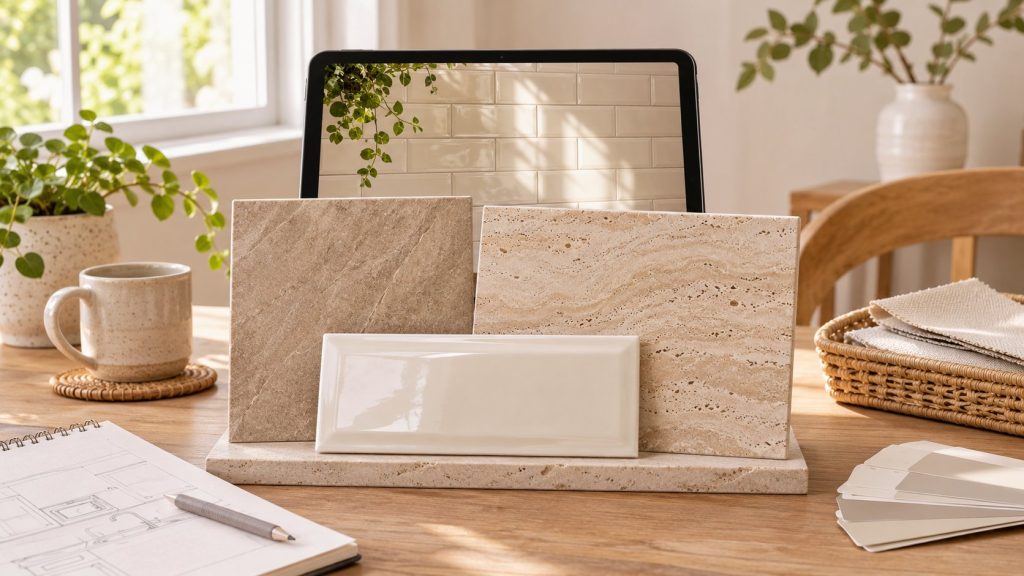
Order a physical sample before you commit to a full order. Screens distort colour, and lighting in your room changes how a tile reads. A sample is the only reliable way to check tone, texture and finish against your actual walls and cabinetry.
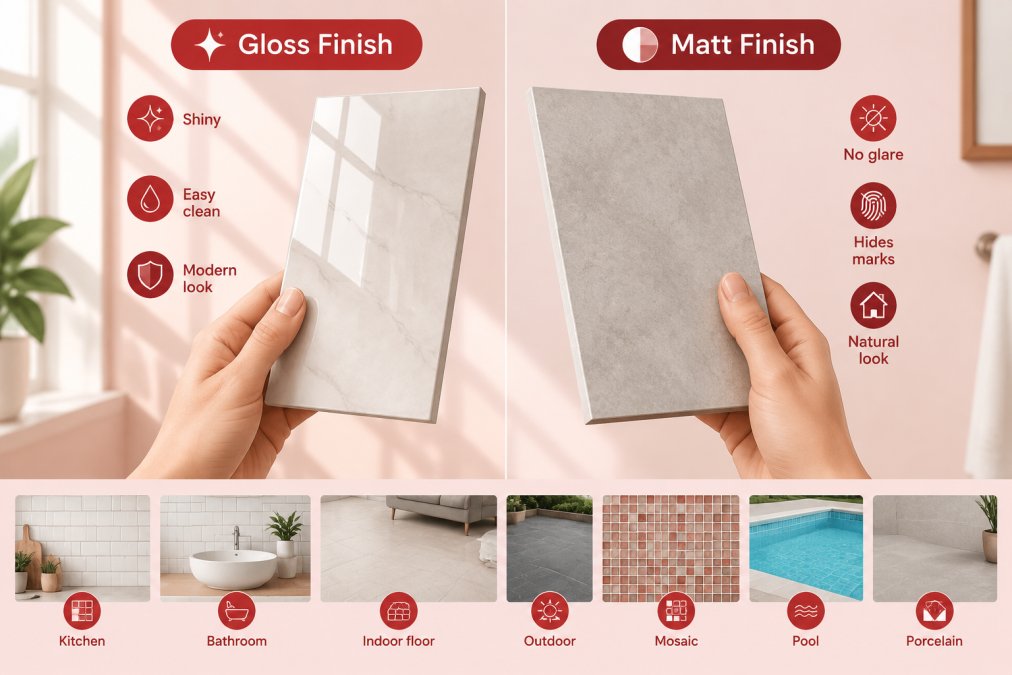
Two tiles that look the same on a monitor can read completely differently in a bathroom with cool downlights. Gloss finishes bounce light and can make a small room feel larger. Matt finishes hide water marks and fingerprints better. Neither is universally better; the room decides.
When your sample arrives, check it in the room where it will go, at the time of day you use that room most. Then check the batch and the face variation. If you are ordering a large run, ask us to confirm the tiles come from the same batch so the colour stays consistent.
How to Calculate Wall Tile Quantity for Your Project
Measure each wall’s height and width in metres, multiply to get square metres, then add a waste allowance. There is no universal allowance: it depends on your layout, the number of cuts and the tile size.
Here is a worked example. A wall 2.4 m high and 3 m wide is 7.2 square metres. Add a waste allowance for cuts and breakages.
The step most people skip is converting square metres into boxes. Tiles are often sold by the box, and the coverage per box varies with tile size, so the same wall can need a different number of boxes depending on the format you choose.
A second worked example shows why format matters. Take a splashback 0.6 m high and 3 m wide, which is 1.8 square metres.
- Measure in metres, not millimetres, to keep the maths simple.
- Measure every wall separately, then total them.
- Subtract large openings such as a window or door, but not small ones you will tile around.
- Round up to whole boxes, since tiles are sold by the box.
- Keep at least one spare box for future repairs and for breakages during cutting.
Watch out: ordering the exact square metreage with no spare leaves you short if a tile chips during cutting or a future repair needs a match, and a later batch may not match the original colour.
Pattern layout changes the maths again. A straight stack or grid generally uses fewer cuts than a herringbone or diagonal layout, which produces more offcuts at every edge and around openings.
If you are tiling around a shower niche, a window reveal or a basin, measure each return and add it separately rather than guessing. Small returns add up across a room.
Tile Delivery and Returns: What to Confirm Before Checkout
Confirm delivery terms, stock availability and the returns policy before you pay. These three details cause most online tile headaches, and all of them are answerable before checkout.
Tiles are heavy and fragile, so freight works differently from a parcel. Delivery generally needs someone on site to receive it and enough access for the truck. Confirm delivery arrangements before you book, since a failed delivery can cause delays to your tiler.
Ask these questions first:
- Is the quantity in stock now? Stock levels change, so confirm before you rely on a delivery date.
- What are the delivery terms? Delivery can be arranged, but availability, prices and terms must be checked on the current website.
- What is the returns policy on tiles? Confirm this on the current website before ordering, especially for a full-room run.
- Are collection options available? Check the current website or ask our team whether collection can suit your project.
Batch matching is the detail most online buyers miss. Tiles are produced in batches, and colour can shift slightly between them. Consistent visual standards remain essential for any interior finish, a principle that applies just as strictly when matching home samples to ensure your decorative elements remain cohesive.
Returns on tiles are often more restrictive than on other goods. Opened boxes, laid tiles and cut tiles are commonly not returnable, and some ranges may be special order. Read the current returns terms before you pay, and keep boxes sealed until you have checked the batch and the face variation against your sample.
Watch out: ordering the last of a batch without confirming future stock can leave you short mid-project, and a later batch may not match the colour you have already laid.
Inspect on arrival. Check a few tiles from different boxes for colour, size and edge condition before the tiler begins. Catching a batch mismatch before installation is far easier than resolving it afterwards.
Matching Premium Wall Tiles to Each Room
Match the tile to moisture, cleaning and light, not just the look. A bathroom, a kitchen splashback and a hallway each put different demands on a wall tile, and the right finish changes with the room.
Bathroom. Moisture and cleaning drive the choice. A glazed porcelain or ceramic wall tile with an even glaze is generally easier to keep clean. Suitability for wet areas depends on the product and the applicable requirements, so check the specification and consult a qualified professional for waterproofing (Specification 26 Waterproofing and water-resistance requirements for building elements in…).
Kitchen splashback. Heat, grease and splashes matter. A gloss ceramic subway tile wipes down easily and reflects light in a small kitchen.
Living areas and hallways. Texture and pattern carry the design here. A matte finish hides marks better on a high-touch wall.
Outdoor walls. Confirm the product is rated for exterior use, and check with the manufacturer or a qualified installer on suitability for your location.
Visit the Campbelltown Showroom to Compare Tiles in Person
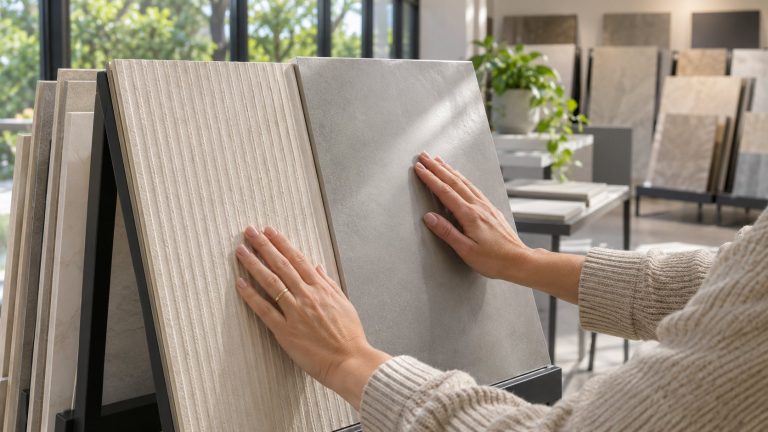
Seeing tiles in person settles the questions a screen cannot answer. Our 1,000 m² showroom at 20A Blaxland Road, Campbelltown, lets you compare finishes, formats and colours side by side before you order online.
Bring your room measurements, a photo of the space and any cabinetry or paint samples. We can help you weigh up porcelain against ceramic, gloss against matt, and large-format against standard sizes. If you are weighing different tile options, our team can discuss the differences with you.
You can browse online first, then visit to confirm. Get directions to the showroom and check current stock, prices and specifications before you commit to a full order.
Buying premium wall tiles online in Australia comes down to three checks: confirm the specification, order a sample, and verify stock and delivery terms before you pay. Bargain Factory Tile Outlet offers wall, floor, bathroom and outdoor tiles at factory-direct prices, a 1,000 m² Campbelltown showroom for hands-on comparison, and advice to help you choose the right tile for each room. Get started with Bargain Factory Tile Outlet and choose your wall tiles with confidence.
Frequently Asked Questions
What should I check before buying premium wall tiles online?
Confirm the tile’s material (porcelain or ceramic), finish (gloss or matt), edge type (rectified or standard), and whether it is rated for wall use. Check the size in millimetres and the coverage per box, then compare the total delivered cost rather than the tile price alone. Ask for a sample so you can see the colour and texture in your own light. Finally, read the delivery and returns terms on the current product page before you order.
How can I tell whether a wall tile is suitable for a bathroom?
Start with the manufacturer’s stated use for the tile, then consider the location: a splashback zone, a shower area or a general wall. Suitability depends on the product and the applicable requirements for that space, so ask the supplier for the current specification and consult a qualified installer or waterproofer about your particular setup. Do not assume a tile is suitable for a wet area just because it looks like a bathroom tile online.
How do I calculate how many wall tiles I need?
Measure the wall height and width in metres, multiply them to get the area, then subtract doors and windows. Divide that area by the coverage per box stated on the product page and round up to whole boxes. Add a waste allowance for cuts and breakages; the right percentage depends on your layout and pattern, so confirm it with your tiler. For example, a 2.4 m by 3 m wall is 7.2 m² before deductions.
Should I order wall tile samples before buying online?
Yes. Screens and studio lighting change how colour and texture read, and a sample lets you check the tile against your cabinetry, bench and existing floors. Order samples of your top two or three options, view them in the room at different times of day, and compare the grout colour you plan to use. Keep the samples until the order arrives so you can check the batch against what you approved.