Last Updated: 21 November 2026
Quick Summary
Porcelain tile is worth the extra cost when the floor or wall has to cope with water, heavy foot traffic or years of cleaning, because its dense body resists moisture and wear far better than standard ceramic. Where none of those pressures apply, ceramic usually does the job for less.
- Porcelain is pressed from finer, denser clay and fired at higher temperatures than ceramic.
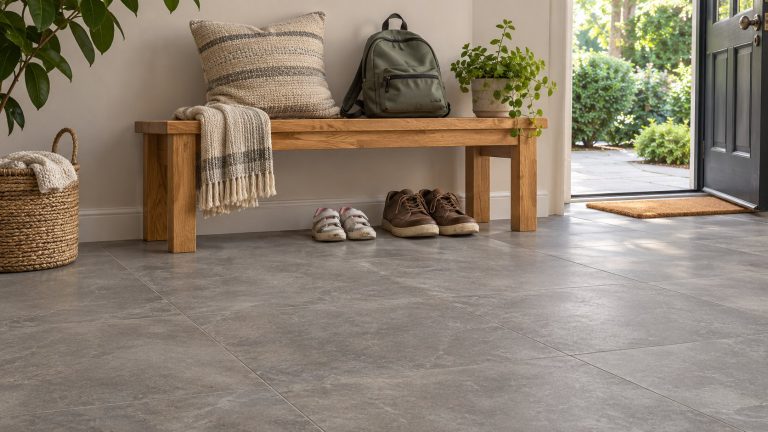
- Porcelain suits bathrooms, kitchens, laundries, hallways, outdoor areas and floors taking constant foot traffic.
- Ceramic suits internal walls, splashbacks, feature walls and light-use floors in dry rooms.
- Subfloor preparation, removal and labour cost largely the same whichever tile you choose.
- Buy a spare box of the same batch at purchase to cover future repairs.
The Short Answer: When Porcelain Tile Earns Its Price
Porcelain tile is worth the extra cost when the floor or wall has to cope with water, heavy foot traffic or years of cleaning, because its dense body resists moisture and wear far better than standard ceramic.
Porcelain is not automatically the better buy just because it costs more. The decision comes down to where the tile goes, how it will be used, and what the installed job costs once adhesive, cutting and labour are counted.
Porcelain vs Ceramic Tiles: What Actually Separates Them
The real difference between porcelain and ceramic comes down to density and water absorption, not marketing labels. Both are clay-based tiles fired in a kiln, but porcelain is pressed from finer, denser clay and fired at higher temperatures, leaving it tighter and less absorbent.
That single difference drives most practical outcomes: porcelain handles wet areas and heavy use better, while ceramic costs less and is easier to cut.
Density, Water Absorption and Where Each One Belongs
Density is the deciding factor. A denser tile absorbs less water, which matters in bathrooms, laundries and anywhere splashes or steam are routine. Ceramic’s more open body is fine on a bedroom wall or a low-traffic floor, but weaker where moisture sits.
Where each one belongs, in practice:
- Porcelain: bathrooms, kitchens, laundries, hallways, outdoor areas and any floor taking constant foot traffic.
- Ceramic: internal walls, splashbacks, feature walls and light-use floors in dry rooms.
If you want to see what is actually available in each family, you can browse ceramic tiles and compare options and current prices online before you commit.
Porcelain Tile Pros and Cons for Real Renovations
Porcelain’s main advantages are durability, moisture resistance and easy cleaning, which is why it dominates wet areas and busy floors. You can see the porcelain range and current specifications to check what is available for your project. Its main drawbacks are a higher purchase price, harder cutting, and a colder, harder feel underfoot.
The pros that matter most:
- Hardness and wear resistance: the dense body resists scratching and scuffing in high-traffic areas.
- Low porosity: tight water absorption makes it a natural fit for wet areas and outdoor use.
- Stain resistance: the surface cleans up well, which suits kitchens and family floors.
The Drawbacks Nobody Puts on the Box
The drawbacks are real and rarely mentioned at the point of sale. Porcelain is harder to cut, so installation can take longer and cost more in labour. It feels cooler and harder underfoot than timber or vinyl, which matters in bedrooms and living areas.
There is also a quiet trap with look-alikes. Many porcelain tiles imitate natural stone and can look convincing in photos, but they are not stone.
A Room-by-Room Decision Framework
Rather than asking whether porcelain is better in general, ask what each room actually demands. The table below sets out the pressures that usually decide the question. It is a guide to the trade-offs, not a substitute for checking the specific product and the requirements that apply to your project.
| Room or use | Main pressures | Where porcelain usually earns its price | Where ceramic or another material can be sensible |
|---|---|---|---|
| Bathroom floor | Constant moisture, cleaning, slip risk | Dense body copes with splashes and frequent mopping | Ceramic on walls; check finish and slip suitability for the floor |
| Kitchen floor | Spills, dropped items, heavy foot traffic | Stain resistance and wear resistance suit busy households | Ceramic on splashbacks and walls |
| Laundry | Moisture, appliances, traffic | Low porosity handles damp and cleaning | Ceramic on upper walls |
| Hallway and entry | High traffic, grit, scuffing | Hardness resists wear in the busiest zone | Ceramic only where traffic is light |
| Living area | Comfort, acoustics, underfoot feel | Easy cleaning and long life | Timber, vinyl or laminate feel warmer and quieter |
| Bedroom | Comfort, warmth | Durable but cold and hard underfoot | Carpet, timber or laminate often preferred |
| Outdoor area | Weather, moisture, slip risk | Frost and moisture resistance suit exposed sites | Check the specific product’s outdoor suitability |
The pattern is consistent: porcelain earns its premium where moisture, traffic or cleaning pressure is high, and struggles to justify it where comfort and warmth matter more than durability.
Repairability and Matching: The Cost Competitors Skip
Repairability is porcelain’s weakest point, and it is worth planning for before you lay a single tile.
Practical steps to protect yourself:
- Buy spares at the time of purchase. Keep a box or two of the same batch for future repairs.
- Record the product details. Note the tile name, size and batch so a match is possible later.
- Plan for the awkward cuts. Keep offcuts from edges and corners; they can be reused for small repairs.
A common mistake is buying exactly the measured area with no spare. When a tile chips two years later, the batch may be gone.
If you want to see what is actually available in each family, you can browse ceramic tiles and compare options and current prices online before you commit.
Installed Cost and Lifecycle Value Compared Like for Like
Comparing tile prices per square metre is misleading, because the installed cost is what you actually pay. A cheaper tile that needs more labour, more cutting or earlier replacement can cost more over time than a pricier one that lasts. The honest comparison is installed cost plus expected service life.
Separating the Line Items
Most quotes bundle several costs together. Breaking them out makes the comparison honest and shows where porcelain’s premium actually sits.
- Tile price per square metre: the visible number, and usually the smallest part of the total. Check current product pages for the tiles you are considering.
- Cutting and layout complexity: large-format and hard porcelain take longer to cut and lay, and intricate layouts add labour.
- Subfloor preparation: an uneven or damaged floor needs levelling or repair before any tile goes down, and this cost applies to every tile type.
- Adhesive and grout: the right products for the material and location, plus any additives the manufacturer specifies.
The key insight is that subfloor preparation, removal and labour are largely the same whichever tile you choose. Porcelain’s premium is concentrated in the tile price and, to a lesser degree, in cutting time. That is why the gap between a ceramic and a porcelain floor is usually smaller than the shelf prices suggest.
A Worked Example, Clearly Hypothetical
Imagine a bathroom floor of 6 square metres with a straightforward layout. A modest waste allowance of around 10 per cent would mean buying roughly 6.6 square metres to cover cuts and breakages. A room with many angles or a diagonal layout needs a higher allowance, so plan around your actual layout, not a universal percentage.
Now extend the example to the whole job. The same 6 square metres needs subfloor preparation, adhesive, grout, removal of the old floor and a tiler’s time. Those costs do not change much between a ceramic and a porcelain tile of similar size.
Lifecycle Value: Where the Maths Changes
Over time, purchase price, maintenance, repairs and expected service life all affect value. Porcelain’s longer service life and lower maintenance can offset a higher upfront cost in busy or wet rooms.
A useful way to think about it is replacement scenarios.
The Italian porcelain tile clearance range shows how affordable porcelain can be when the specification suits the job, which changes the maths considerably.
Porcelain Tiles for Bathrooms, Kitchens and Wet Areas
Porcelain tiles for bathrooms are the clearest case for paying the premium, because low porosity and stain resistance suit constant moisture and cleaning.
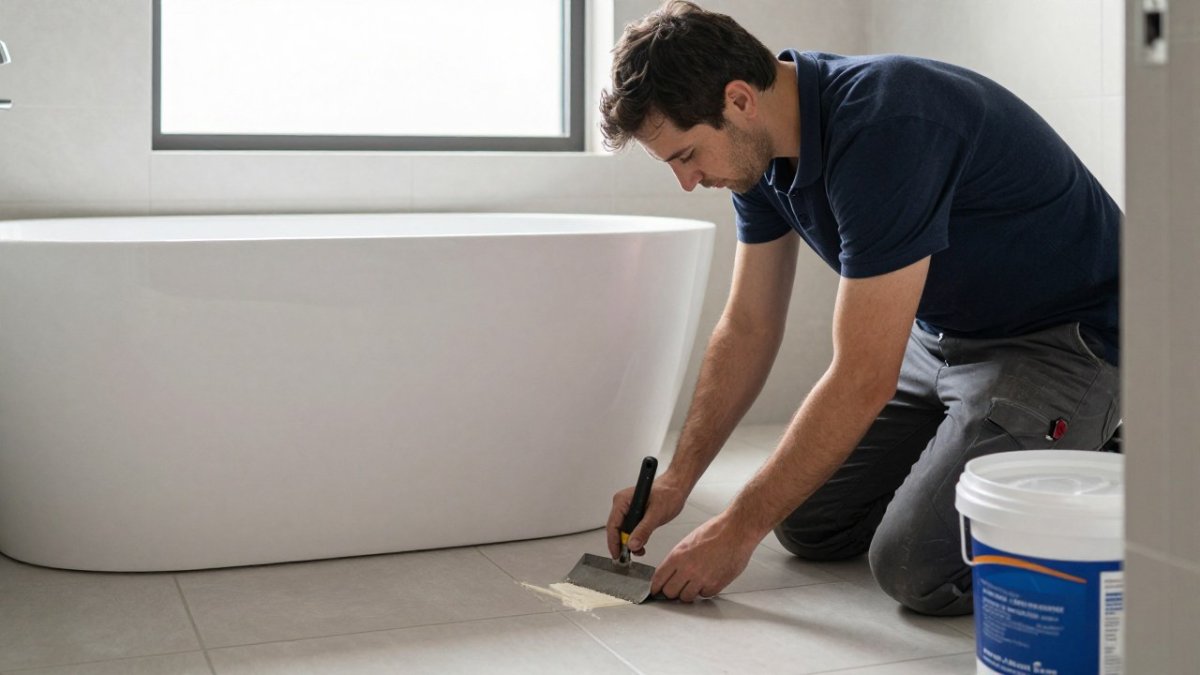
One caveat applies to every wet area: suitability depends on the specific product, the location and the applicable requirements, so check the manufacturer’s guidance and consult a qualified professional before committing.
For layout and style ideas across floors, showers and mosaics, explore our bathroom tile ideas and inspiration to see how porcelain works in real room settings.
Comfort, Slip Resistance and Surface Finish
Comfort and slip resistance are where porcelain’s reputation takes the most knocks, and both come down to surface finish rather than the material itself.
Underfoot feel is a genuine trade-off. Porcelain is harder and cooler than timber, vinyl or laminate, which some people love for its crisp, clean feel and others dislike in bedrooms.
Slip resistance is not a single rating you can apply to a whole category. If outdoor use is part of the plan, you can explore outdoor porcelain tiles and pavers to compare finishes suited to the conditions.
Repair, Replacement and Matching Tiles Down the Track
Repairability is porcelain’s weakest point, and it is worth planning for before you lay a single tile. A chipped or cracked porcelain tile usually cannot be patched invisibly; it has to be removed and replaced, and matching a discontinued tile later can be difficult.
Practical steps to protect yourself:
- Buy spares at the time of purchase. Keep a box or two of the same batch for future repairs.
- Record the product details. Note the tile name, size and batch so a match is possible later.
- Plan for the awkward cuts. Keep offcuts from edges and corners; they can be reused for small repairs.
A common mistake is buying exactly the measured area with no spare. When a tile chips two years later, the batch may be gone. The modest cost of a spare box is cheap insurance on a floor you plan to keep.
Choosing Your Tiles at Our Campbelltown Showroom
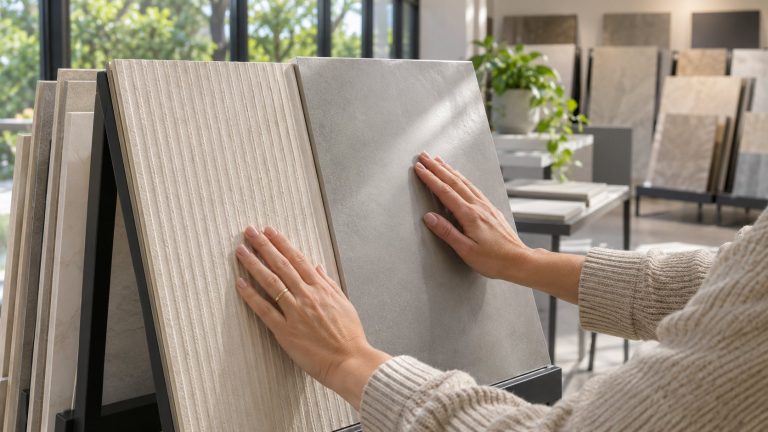
The best way to settle the porcelain question is to see and feel the tiles in person, because photos rarely capture finish, colour and texture accurately.
Bring your room measurements and a photo of the space.
If you are weighing porcelain against a natural stone look, ask us to point out the difference between genuine stone and porcelain look-alikes, so you know exactly what you are buying.
The decision rarely comes down to porcelain being “better” in the abstract. It comes down to the room, the traffic and the finish.
Frequently Asked Questions
Is porcelain tile worth the extra cost compared with ceramic?
It depends on where the tile is going. Porcelain is denser and absorbs less water, so it suits bathrooms, laundries and outdoor areas where moisture is constant. Ceramic generally costs less upfront and offers plenty of budget-friendly options, which makes it a sensible choice for low-traffic walls and dry rooms. Compare the installed cost, not just the tile price, and match the material to the room rather than assuming the dearer one is always better.
What is the difference between porcelain and ceramic tiles?
Both are made from clay and fired in a kiln, but porcelain is fired at higher temperatures with a denser body, which gives it lower water absorption and greater hardness. Ceramic has a softer body and a glazed surface, so it is lighter and easier to cut. That density difference is why porcelain holds up better in wet areas and high-traffic floors, while ceramic keeps costs down on walls and light-use spaces.
Are porcelain tiles for bathrooms a good choice?
They are a common pick because the low porosity resists moisture and staining, and the dense body handles daily cleaning well. Suitability still depends on the specific product and where it is laid: floor and wall tiles have different requirements, and slip resistance varies with the surface finish. Check the manufacturer’s specifications for each tile and speak to a qualified professional about waterproofing and slip requirements before you commit.
Does porcelain tile last longer than ceramic tile?
Porcelain’s hardness and wear resistance generally give it a longer service life in busy floors and wet areas, which is where much of its long-term value comes from. Ceramic can still last many years in the right spot, such as a splashback or a low-traffic wall. The bigger influences on how long either lasts are correct installation, a sound subfloor and proper adhesive and grout, so factor those into your budget.