Last Updated: November 17, 2026
Quick Summary
Choose floor tiles for a busy family home by matching the surface to how each room is used, then prioritising dense, hard-wearing porcelain for kitchens, hallways and wet areas. Pick a matte or textured finish with a mid-tone colour and tight grout line to hide marks and cut cleaning time.
- Rank each room by traffic and mess before you look at any tile.
- Porcelain is denser and less porous than ceramic, so it suits busy floors and wet areas.
- Matte finishes hide dust and marks better than glossy surfaces on busy floors.
- Mid-tone or darker grout hides stains far better than bright white grout.
- A 4 m by 5 m room is 20 square metres; with a 10% allowance, order 22.
Start With How Each Room Is Used
The fastest way to narrow your options is to map how each room gets used before you look at a single tile. How to choose floor tiles for a busy family home comes down to matching the surface to the traffic, the mess and the people who make it.
Walk through your home and rank each space:
- Kitchen: dropped utensils, splashes, constant foot traffic
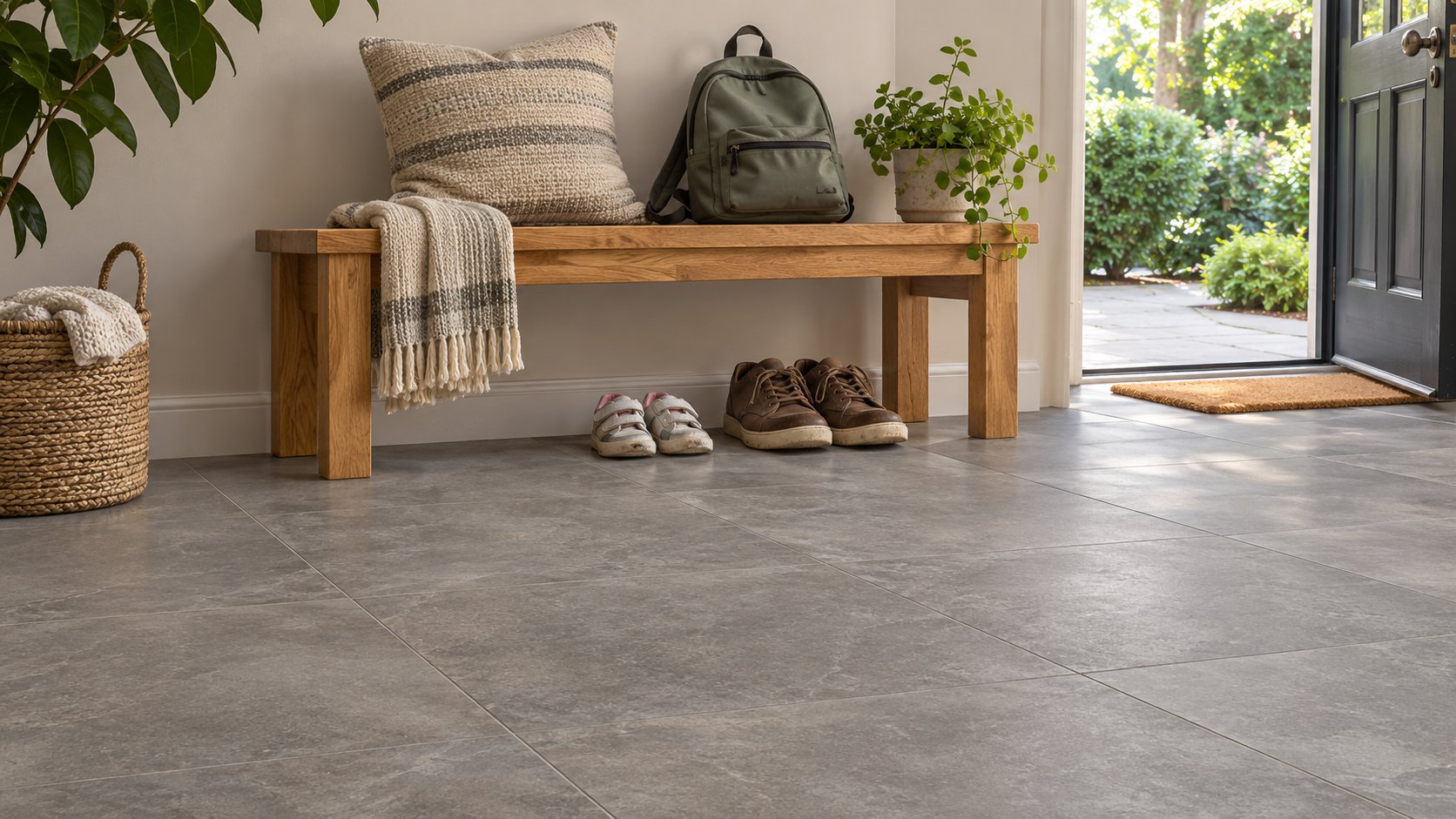
- Hallway and entry: the dirtiest, hardest-working floor in the house
- Bathroom: water, steam and bare feet
The kitchen and hallway usually take the most punishment. If you want a deeper look at busy zones, read our guide on choosing floor tiles that hold up in high-traffic areas.
Best Floor Tiles for Family Homes: Comparing Materials
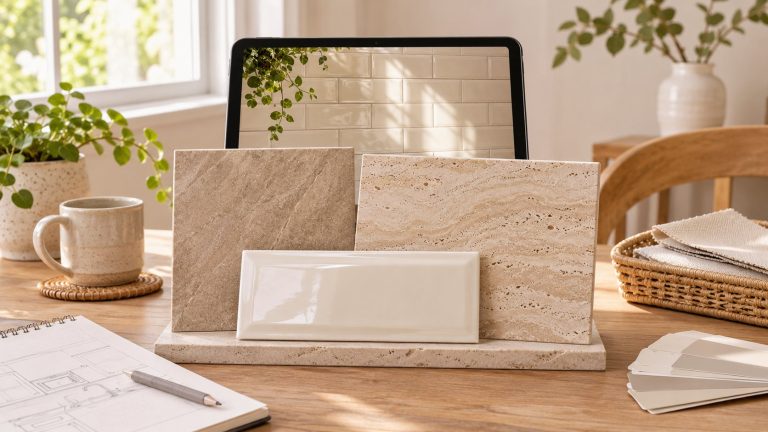
Porcelain is often chosen for busy family homes because it is dense, hard-wearing and handles water well. Ceramic costs less but is softer under impact. Natural stone looks beautiful but needs more care. Here is how the main options stack up.
| Material | Durability | Maintenance | Best For |
|---|---|---|---|
| Porcelain | High, hard-wearing | Easy, low fuss | Kitchens, hallways, wet areas |
| Ceramic | Moderate | Easy, but chips more | Low-traffic rooms, walls |
| Natural stone | Varies by stone | Needs sealing and care | Feature floors, outdoor areas |
| Timber-look porcelain | High | Easy | Living areas wanting warmth |
Porcelain and Ceramic: What Actually Differs
Porcelain is a denser, less porous tile fired at higher temperatures. It resists water absorption and wear better than ceramic, which is why it suits busy floors and wet areas.
Ceramic is softer and more affordable. It works well in bedrooms or on walls, but a busy hallway will show chips and wear sooner. For a family home, porcelain earns its place.
Natural Stone and Its Porcelain Look-Alikes
Natural stone is real quarried material such as travertine, sandstone or marble. Each tile is unique, and most stones need sealing and gentle cleaning.
Porcelain look-alikes copy the look of stone without the upkeep. They are printed and textured to mimic it, and they handle spills and traffic better.
If you are weighing real stone against a look-alike, our guide to natural stone paving and tiles explains the types, sealing and protection.
Easy-to-Clean Floor Tiles: Finishes, Grout and Maintenance
A matt or textured finish hides marks and dust far better than a glossy surface, which shows every footprint. For easy-to-clean floor tiles, pick a mid-tone colour, a tight grout line and a finish that suits the room. But the finish is only half the story: the grout you choose will shape how much time you spend maintaining the floor for the next decade.
How Finish Affects Cleaning
- Glossy: reflective and bright, but shows smears, paw prints and dust in low light
- Matte: hides dust and marks, still easy to mop, and the safest all-round choice for busy floors
- Textured: best grip underfoot, but the surface holds fine dirt, so it needs a brush or microfibre mop rather than a quick wipe
Heavily textured tiles can take more effort to keep clean in kitchens, where grease and flour may settle into the surface. If grip matters in a wet area but you want easier cleaning elsewhere, it is reasonable to use a textured tile in the bathroom and a matte tile through the living areas.
Grout: The Decision Most Buyers Underestimate
Grout is where a family floor shows its age first. Three things drive how well it holds up:
- Width: narrower joints collect less dirt and are easier to keep clean, but very narrow joints demand accurately made tiles and a careful install. Wider joints suit rustic or stone-look layouts but trap more debris.
- Colour: a mid-tone or darker grout hides stains far better than bright white, which shows every splash of tea, tomato sauce and muddy paw print. A grout colour matched closely to the tile also disguises slight variation.
- Type: cement-based grout is common and affordable but porous unless sealed; epoxy grout is denser and more stain-resistant but costs more and needs an experienced installer. Ask what the tile and grout manufacturer specifies for your product rather than assuming one type suits every floor.
Whether grout or tile needs sealing depends on the product. Check the manufacturer’s instructions and ask a qualified tiler what is appropriate for your chosen combination.
A Practical Cleaning Routine
A simple routine keeps a family floor presentable without harsh chemicals:
- Sweep or dry-mop daily in entry and kitchen zones to lift grit before it scratches
- Damp-mop with a pH-neutral cleaner; acidic or abrasive cleaners can dull some finishes and damage grout over time
- Blot spills rather than wiping them across the joint lines
Watch out: a glossy tile in a bright hallway will show every mark, and a white grout in a kitchen will discolour faster than you expect, so view samples in your own home lighting before you commit.
Floor Tiles for Pets and Children: Grip, Spills and Scratches
Grip and scratch resistance are the two things to prioritise when you have pets and small children. A textured or matte surface gives paws and bare feet more traction than a polished one. Porcelain handles claws and dropped toys better than softer ceramic. But the practical decisions run deeper than that, and a little preparation now saves a costly mistake later.
Understanding Slip Ratings Without Over-Trusting Them
Slip-resistance ratings such as R10 and R11 come from standardised test methods, and the number describes performance under the specific conditions of that test, not a guarantee for every real-world situation. A higher rating generally indicates more resistance, but suitability still depends on the product, the room, how wet the floor gets and any applicable requirements for your project.
- Treat the rating as one input, not a pass or fail label
- Check the rating against the intended location and ask the manufacturer or a qualified professional whether it suits your use
- Remember that a polished tile can be slippery when wet even if its dry performance looks acceptable
No single rating suits every space. If a wet area is involved, confirm the requirement with a qualified professional before you order.
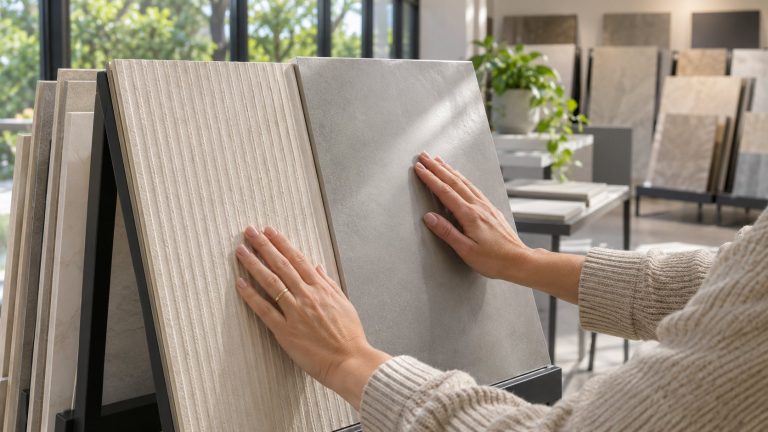
Test Samples at Home Before You Buy
A showroom visit narrows the field, but a home test settles it. Ask for a sample of each shortlisted tile and try these checks:
- Grip test: place the sample on the floor and walk across it in socks, then with slightly damp soles, to feel how it behaves
- Cleanability test: smear a little cooking oil, tomato sauce and muddy water on the surface, leave it briefly, then wipe with a damp cloth and a pH-neutral cleaner to see what remains
- Scratch test: drag a coin or a pet claw across an offcut to see how the surface responds
These are indicative checks, not laboratory results, but they can reveal more than a screen image.
Room-by-Room Choices for Children, Pets and Spills
- Muddy entrances and hallways: a matte, mid-tone porcelain with a tight grout line and a darker grout; hides dirt and takes constant traffic
- Kitchens: matte porcelain that wipes clean easily, with a stain-resistant grout; food and drink spills are constant
- Bathrooms: a textured, matte tile for grip, with the rating checked against the location and any applicable requirements
Weighing Whole-of-Life Cost, Not Just Tile Price
The purchase price per square metre is only part of the cost. Compare the full picture before deciding:
- Tile and grout: the visible cost, but not the whole cost
- Installation: larger formats and intricate patterns take longer and may need a flatter subfloor, which affects labour
- Sealing and aftercare: some natural stone and some grouts need periodic sealing; porcelain look-alikes usually need less
A cheaper tile that chips or stains early may cost more over its life than a durable tile that needs little attention.
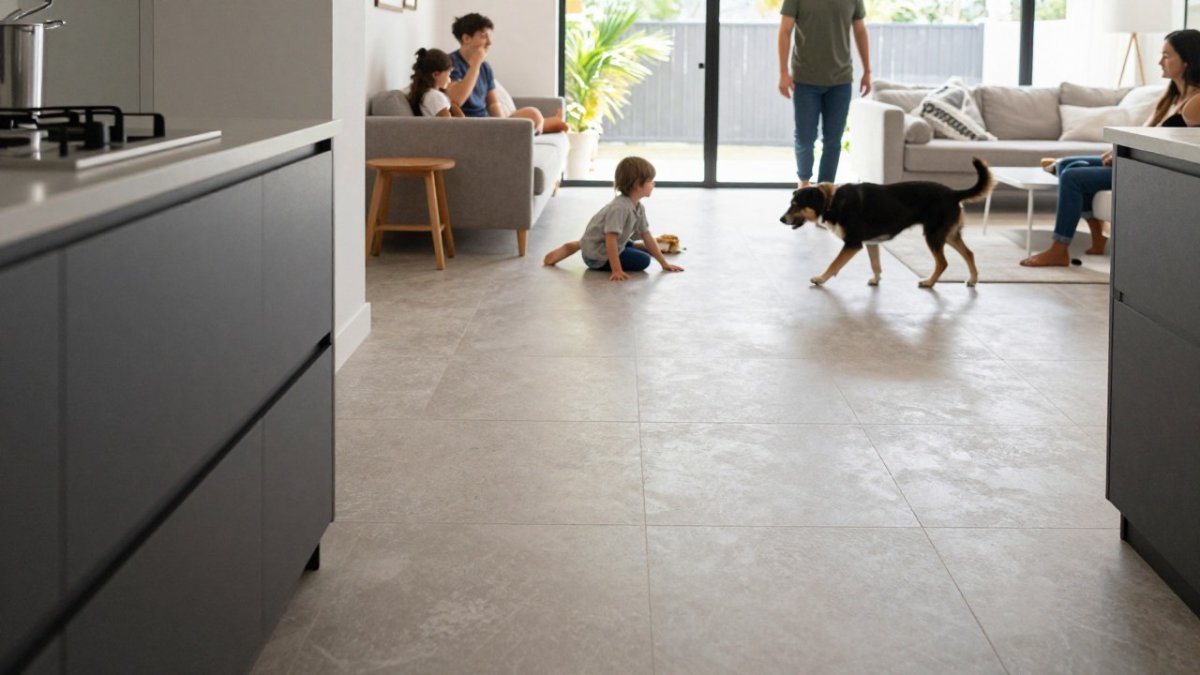
Watch out: choosing on tile price alone often hides the real cost of grout, sealing, subfloor preparation and replacement, so compare the whole job rather than the square-metre rate.
Floor Tile Size Guide: Layout, Grout Lines and Cutting
Large-format tiles make a room feel bigger and cut down on grout lines, which means less to clean. Small tiles offer more grip and suit awkward spaces. This floor tile size guide helps you weigh both.
- Large format: fewer grout lines, sleek look, needs a flatter subfloor
- Medium: the flexible middle ground
- Small or mosaic: more grip, more grout, good for tricky shapes
Bigger tiles often need more cutting around edges, so plan the layout first. A simple, centred layout with balanced cuts looks calmer than a busy pattern.
Colour, Pattern and Matching Tiles to Your Interior
Light tiles make a small room feel open, while dark tiles add depth and mood. Match your floor to the interior rather than the trend of the moment. A neutral palette is the safest base for a family home, with pattern saved for splashbacks or features.
To see the difference in practice, compare light and dark floor tiles in the same staircase interior and watch how each changes space and contrast.
- Neutral: forgiving of dirt, easy to live with
- Warm tones: soften a hard surface
- Pattern: adds character, best in smaller doses
Working Out How Many Tiles You Need
Measure each room’s length and width, multiply them for the area, then add a waste allowance for cuts and breakages. The allowance depends on your layout, so treat any figure as a starting point, not a rule.
Here is a worked example. A room 4 m by 5 m is 20 square metres. With a 10% allowance for a simple layout, order 22 square metres.
Bring Your Shortlist to the Campbelltown Showroom
Tiles look different under showroom light than on a screen, so it pays to see them in person before you commit.
If you are weighing up the timber look, browse our timber look tiles range. And if you are wondering whether the trip is worth it, read why buying tiles from a showroom still makes sense.
Choosing a family floor is a balancing act between looks and hard work, and the right shortlist makes it simpler.
Frequently Asked Questions
What type of floor tile is best for a busy family home?
There is no single answer, because the right floor tiles depend on the room, the traffic and the finish you want. Porcelain is a common starting point for busy households: it is dense, hard-wearing and available in matt and textured finishes that suit wet areas better than polished surfaces. Ceramic can work in lower-traffic rooms, while natural stone suits some spaces but needs more care. Compare wear resistance, grip and maintenance for each room before deciding, and check current product specifications on our website.
Are porcelain tiles a good choice for family floors?
Porcelain is often chosen for family floors because it is dense and resistant to wear, and it comes in a broad range of sizes and finishes. For kitchens, hallways and open-plan living, a matt or textured porcelain gives more grip underfoot than a polished tile. Keep in mind that slip resistance depends on the specific product and where it is laid, not on the word porcelain alone. Ask for the product’s technical data and speak to a qualified professional about suitability for your space.
Which floor tiles are easiest to clean?
Easy-to-clean floor tiles usually have a smooth, non-porous surface and a grout line that does not trap dirt. Glazed porcelain and ceramic are straightforward to wipe and mop, while heavily textured tiles can hold onto crumbs and pet hair. Grout colour and width mattr too: a mid-tone grout in a narrow joint hides everyday marks better than a wide white joint. For a busy household, choose a finish you can realistically maintain and confirm cleaning guidance with the manufacturer.
Are large-format tiles practical for family homes?
Large-format tiles can be practical because fewer grout lines mean less dirt collection and a more open look in living areas. The trade-offs are weight, cutting and the need for a very level subfloor, since unevenness shows up more on big tiles. Smaller tiles offer more grip through more joints and are easier to handle in small or awkward rooms. A floor tile size guide helps, but the final choice depends on your layout and who is installing it.