Last Updated: October 26, 2026
Quick Summary
The best tile types for small bathrooms are chosen by function first: porcelain and mosaic suit wet floors, while ceramic and natural stone work well on walls. A moderate 300x300mm tile is a safe middle ground, and light, low-contrast colours help the room feel bigger.
- Porcelain is dense and handles moisture well, making it the default floor choice for most small bathrooms.
- Ceramic is lighter and budget-friendly but more porous, so avoid it on busy shower floors.
- Mosaic and penny tiles add grip and drainage on shower floors but mean more grout to clean.
- Light, low-contrast colours such as pale greys, warm whites and soft beiges make a room look bigger.
- Check the manufacturer’s slip rating for each specific tile and confirm it suits your location.
Start With the Decision That Matters Most: Floor or Wall
The best tile types for small bathrooms are chosen by function first: a floor tile needs grip underfoot and tolerance for water, while a wall tile mainly needs to look right and clean up easily.
So start here. Walk into the room and ask what each surface has to survive. Shower floors take constant water, shampoo bottles and bare feet. Walls take steam and splashes but almost no impact. That single split narrows your shortlist fast.
If the floor is your sticking point, our guide on how to choose bathroom floor tiles walks through the practical tests in more detail.
The Best Tile Types for Small Bathrooms Compared
Each tile family below solves a different problem in a small room. The summary table gives you the quick version before the detail.
| Tile type | Best for | Watch out for | Maintenance |
|---|---|---|---|
| Porcelain | Floors and walls, wet areas | Harder to cut; check the finish | Low |
| Ceramic | Walls, low-traffic floors | Less dense than porcelain | Low |
| Mosaic and penny | Shower floors, niches, curves | More grout to clean | Medium |
| Natural stone | Feature walls, floors with character | Needs sealing; varies tile to tile | Higher |
Porcelain
Porcelain is the default floor choice for most small bathrooms because it is dense, handles moisture well and comes in finishes from matt to polished. Its low water absorption is what makes it a common pick for wet rooms. Look for a matt or textured surface on the floor rather than a polished one.
Ceramic
Ceramic tiles are lighter and usually easier on the budget, which suits walls and low-traffic floors. The trade-off is density: ceramic is more porous than porcelain, so it is generally not recommended for busy shower floors.
Mosaic and Penny Tiles
Mosaic and penny tiles win on small shower floors because the many grout lines add grip and help water find the drain. They also bend around curves and niches better than large tiles. Expect more grout to keep clean. If you like the look, browse our Carrara mosaic tile range and a penny round marble mosaic to see how they read in a small space. Remember that natural stone mosaics and porcelain look-alikes behave differently, so check the material before you commit.
Natural Stone
Natural stone, including travertine and marble, brings character no print can copy. It also needs sealing and varies from tile to tile, so order enough in one batch. Treat it as a deliberate choice, not a budget default.
Choosing the Best Tile Size for a Small Bathroom
The best tile size for a small bathroom is usually a moderate one: large enough to reduce grout lines, small enough to keep the floor from looking like a slab and to allow proper falls to the drain. Large-format tiles can make a room feel more open, but in a tight shower they leave little room for drainage slope. Smaller tiles give the installer more control around falls.
A 300x300mm tile is a safe middle ground for floors and walls. If that suits your layout, our 300×300 Tuscan matt porcelain tile is worth a look in person.
Small Bathroom Floor Tile Ideas That Hold Up in Practice
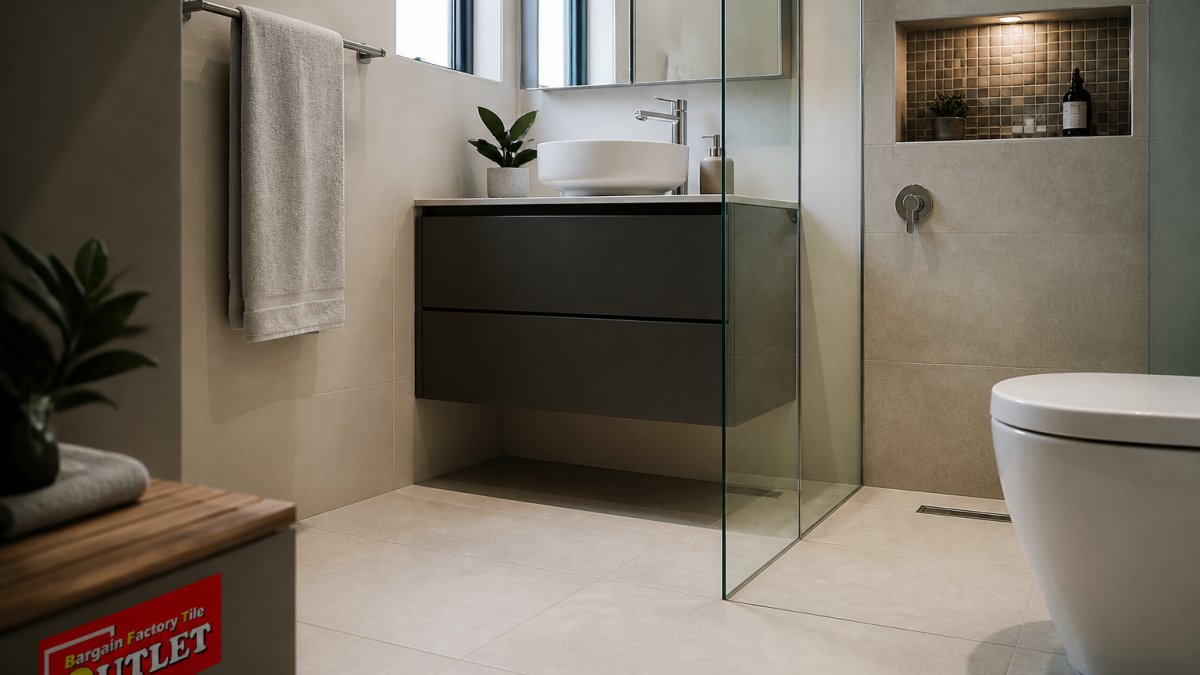
Practical small bathroom floor tile ideas lean on contrast and direction. A mid-tone floor with pale walls makes the room feel grounded without closing it in. Running rectangular tiles lengthwise can stretch a narrow floor visually. On shower floors, a mosaic sheet gives grip and drainage without a dozen separate cuts.
One hypothetical example: a 1.8m by 2.1m bathroom with a walk-in shower. A matt porcelain floor in a warm grey, paired with a penny mosaic inside the shower zone, keeps the main floor easy to clean while giving the wet area grip. That is illustrative, not a rule.
Bathroom Tile Colours to Make a Room Look Bigger
Light, low-contrast bathroom tile colours make a room look bigger because they reflect more light and blur the edges between surfaces. Pale greys, warm whites and soft beiges do the most work. A darker floor with lighter walls adds depth without shrinking the space.
Contrast is the lever. Too many competing colours chop a small room into segments. Pick two tones and let texture do the rest.
Ceramic vs Porcelain Bathroom Tiles: Which Suits Your Project
Ceramic vs porcelain bathroom tiles comes down to density and placement. Porcelain is denser and better suited to floors and wet areas; ceramic is lighter and often the budget-friendly pick for walls. Neither is “better” in the abstract, it depends where the tile is going.
For a shower floor, lean porcelain or mosaic. For a splashback or upper wall, ceramic can do the job well. Check the manufacturer’s stated use for each tile rather than assuming.
Maintenance and Slip Considerations Before You Buy
Slip resistance is not a universal label you can apply to a tile type. Suitability depends on the product, where it is laid and the applicable requirements, so check the manufacturer’s slip rating for the specific tile and confirm it suits your location. For wet areas, ask a qualified professional about waterproofing and drainage, because compliance depends on your site and the relevant standards.
Maintenance follows the same logic. More grout means more cleaning, so mosaics need attention. Natural stone needs sealing. Porcelain and ceramic are the low-effort options.
Bring Your Bathroom Measurements to Our Campbelltown Showroom
Numbers beat photos. Bring your room measurements, a photo of the space and your budget to our Campbelltown showroom so you can see tiles in person under real light. Screen colours mislead, and a small sample board never tells the whole story. Our team can talk you through floor and wall options, adhesives and accessories. You can also start with our outlet tiles range and showroom details before you visit.
Frequently Asked Questions
What type of tile is best for a small bathroom floor?
There is no single best tile, but porcelain is the most common choice for small bathroom floors because it is dense, handles moisture well and comes in many finishes. Mosaic and penny tiles suit shower floors where extra grip and drainage around the drain matter. Check the product’s slip rating for your specific location, and ask a qualified professional whether it meets the requirements for your project before you commit.
Are large tiles or small tiles better for a small bathroom?
Large-format tiles usually make a small bathroom feel bigger because fewer grout lines break up the floor and walls. Smaller tiles and mosaics work better on shower floors and curved or angled areas where cuts are awkward. Many small bathrooms combine both: large tiles on the main floor and walls, with mosaics inside the shower.
What colour tiles make a small bathroom look bigger?
Light, low-contrast colours tend to make a small bathroom feel more open. Pale greys, warm whites and soft neutrals on both floor and walls reduce visual breaks. Matching grout to the tile keeps the surface looking continuous. Dark tiles can work well in a small bathroom, but they absorb light, so plan your lighting carefully before choosing.
Are porcelain tiles a good choice for a small bathroom?
Porcelain suits small bathrooms well. It is denser and less water-absorbent than standard ceramic, and it is available in matt, textured and gloss finishes. The trade-off is that porcelain is harder to cut, which can impact cutting time or a tiler’s labour. Compare ceramic vs porcelain bathroom tiles on thickness, finish and slip rating, not just price, before deciding.
Choosing tiles for a small bathroom is really a series of trade-offs between grip, upkeep, look and budget. Bargain Factory Tile Outlet can help you weigh them with a 1,000 m² Campbelltown showroom, factory-direct pricing and straight advice on what suits each surface. Get started with Bargain Factory Tile Outlet and get your bathroom measurements in front of real tiles before you buy.