Last Updated: October 19, 2026
What Makes an Outdoor Tile Non-Slip?
Non-slip tiles for outdoor use are those whose surface texture and finish resist hydroplaning when wet, measured under test conditions that mimic a wet walking surface. Grip comes from surface profile, not from a label alone, and the same tile can suit one spot and fail in another.
This guide from Bargain Factory Tile Outlet walks through the practical differences between tile families, because “non-slip” on a box tells you very little on its own. Below, we break down what actually creates grip, how to compare types, and where each option belongs.
Three things drive real-world slip resistance:
- Surface texture. A raised, stippled or bush-hammered face breaks up water film. Polished faces do not.
- Water absorption. Dense, low-absorption tiles hold less surface water and stain less.
- Contaminants. Wet leaves, pool salt, soap residue and dust all reduce grip regardless of the tile.
A common mistake is choosing a tile from a photo or a showroom floor and assuming it will behave the same on a shaded, north-facing patio that stays damp for days. Always ask for the product’s current technical data and check how it performs wet, not dry.
Australian standards for slip resistance exist, and testing methods vary. We won’t quote ratings here because suitability depends on the product, the location and the requirements that apply to your project. Confirm the current specification with the manufacturer and take advice from a qualified professional before you commit.
Outdoor Porcelain Tiles: Dense, Low-Absorption Options
Outdoor porcelain tiles are the default choice for most paved areas because they are dense, absorb very little water and hold their colour well. They are also the easiest family to match to indoor flooring if you want a continuous look from living room to patio.
What most guides miss is that “porcelain” covers a huge range. A polished porcelain paver and a textured, bush-hammered paver are both porcelain, and only one of them belongs beside a pool.
Look for these when comparing outdoor porcelain tiles:
- A textured or structured face for walkways, pool surrounds and steps.
- Consistent thickness and a rectified edge if you want tight joints.
- Frost and thermal shock suitability if the tile is exposed year-round.
- A matching indoor tile in the same range if you want visual flow.
The trade-off is honesty: a highly textured porcelain paver is less comfortable underfoot than a smooth one, and it traps dirt in the profile more readily. That is the price of grip. If comfort matters most, use textured porcelain on the busy path and a smoother finish on a covered entertaining area.
Natural Stone Outdoor Tiles: Texture and Character
Natural stone outdoor tiles bring texture and character that porcelain imitations struggle to match, but they need more from you. Stone is porous to varying degrees, so sealing and maintenance become part of the purchase decision, not an afterthought.
Travertine is the classic example. Its natural pits and honed or tumbled finishes give genuine grip, and it stays cooler underfoot than many porcelain options. The catch is that those same pits collect dirt and need filling or sealing depending on the finish you choose.
The distinction that matters most: natural stone is quarried and cut stone, while porcelain look-alikes are printed and glazed to imitate it. They are different products with different maintenance needs, and they should be priced and specified as such.
Ask these questions before buying stone:
- Is the finish honed, tumbled, brushed or polished? Polished stone is the least suitable for wet outdoor areas.
- Does the supplier recommend sealing, and how often?
- Is the batch consistent in colour and thickness?
Stone rewards patience. If you want a surface that ages with character and you are prepared to maintain it, it is hard to beat. If you want set-and-forget, porcelain is the safer bet.
Pool Tiles Slip Resistance: What to Check Before You Buy
Pool tiles slip resistance is the single most important specification around a pool, and it is also the one most often glossed over. The pool surround, the coping and the pool interior all face different conditions and may need different products.
Around the pool, you want a textured surface that stays grippy when wet and does not become abrasive on bare feet. Inside the pool, glass mosaics and specialist pool tiles are common because they are smooth, easy to clean and visually striking, but the interior is not a walking surface in the same way the surround is.
Check these before you buy pool tiles:
- Wet grip of the surround, not just the dry feel.
- Salt or chlorine resistance if the pool is treated.
- Colour stability under constant UV and chemical exposure.
- Compatibility with the coping so the transition is safe and level.
Ask to see the actual product data sheet for the specific pool tile you are considering, and confirm the wet slip performance for the surround separately from the pool interior. Treat the two as different purchases even if they come from the same range.
We stock pool glass mosaics and outdoor ranges at our Campbelltown showroom, and we are happy to talk through which products suit a pool surround versus a pool interior. We do not provide installation, so bring your tiler or pool builder into the conversation early.
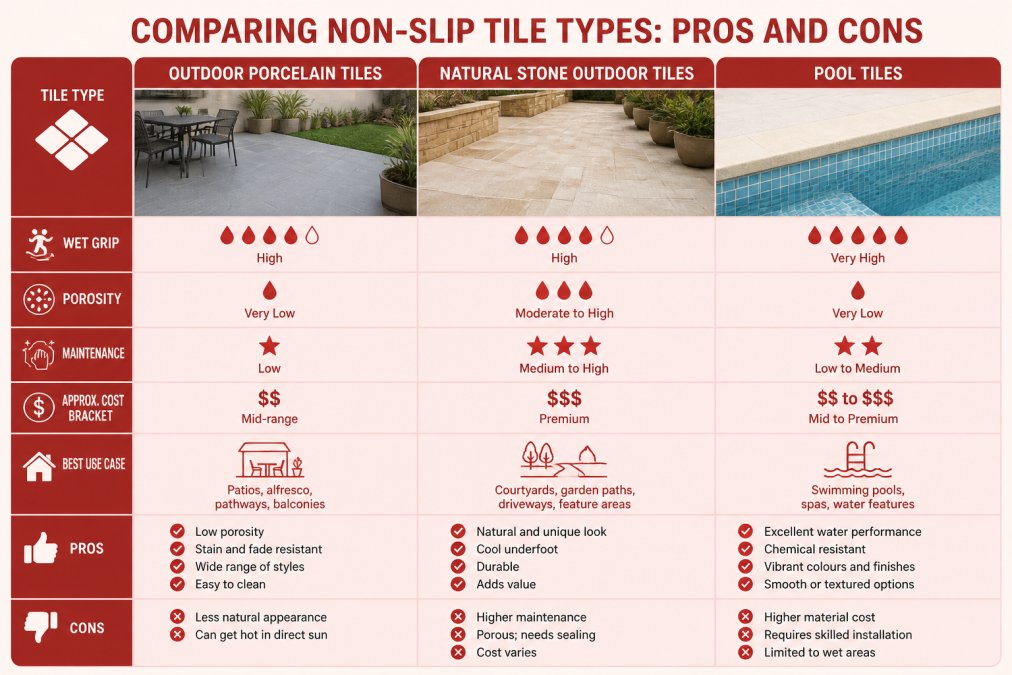
Comparing Non-Slip Tile Types: Pros and Cons
Here is the short version of how the main families stack up. Treat it as a starting point, not a final answer, because the right tile depends on where it is going and how it will be used.
| Tile type | Wet grip | Water absorption | Maintenance | Best for |
|---|---|---|---|---|
| Outdoor porcelain (textured) | Good when textured | Very low | Low | Paths, patios, pool surrounds |
| Outdoor porcelain (polished) | Poor when wet | Very low | Low | Covered areas only |
| Natural stone (honed/tumbled) | Good | Moderate to high | Regular sealing | Courtyards, garden paths |
| Natural stone (polished) | Poor when wet | Moderate | High | Indoor or covered use |
| Pool glass mosaic | Smooth, not for walking | Very low | Low | Pool interior and waterline |
Outdoor porcelain, textured. Pros: durable, low absorption, easy to clean, wide style range. Cons: texture traps dirt, less comfortable underfoot, polished versions are unsuitable wet.
Natural stone. Pros: genuine character, good grip in honed or tumbled finishes, cooler underfoot. Cons: needs sealing, more variable batch to batch, higher maintenance.
Pool glass mosaic. Pros: striking appearance, easy to clean, colour-stable. Cons: not a walking surface, requires careful substrate preparation, best installed by a specialist.
The honest summary: there is no single best non-slip tile for outdoors. There is a best tile for your specific spot, and that is a different question.
Outdoor Tile Maintenance: Keeping Grip and Appearance
Outdoor tile maintenance is where most outdoor projects quietly fail. A tile that grips beautifully on day one can become slick within a season if it is never cleaned properly.
Grit, pollen, leaf tannin and pool salt all build up in the surface texture of non-slip tiles. Once that film forms, the texture stops doing its job. The fix is boring but effective:
- Sweep or blow down hard surfaces weekly during heavy leaf fall.
- Wash with a pH-neutral cleaner and a stiff brush, not just a mop.
- Rinse thoroughly so no residue dries into the profile.
- Reseal natural stone on the schedule the manufacturer recommends.
Grip is a maintenance outcome as much as a product feature. A textured tile that is never cleaned performs worse than a smoother tile that is kept clean.
Avoid harsh acid washes on stone and on any tile with a sealer, and test any new cleaner on an offcut first. If you are unsure what a product tolerates, ask the manufacturer rather than guessing.
Matching the Tile to Your Location and Usage
Location decides more than style does. A covered alfresco area, an exposed path, a pool surround and a garden step each load the tile differently, and the same product can be right for one and wrong for another.
Work through these questions in order:
- Is the area covered or exposed? Covered areas stay drier and tolerate smoother finishes.
- Does water pool or drain? Poor fall means standing water, which demands more texture.
- Is it walked on barefoot? Pool surrounds need grip without abrasiveness.
- How much maintenance will you actually do? Be honest; stone needs more.
- Do you want indoor-outdoor flow? Match ranges if visual continuity matters.
Here is a worked example of how we would think about a small project. Say you have a covered patio of about 20 square metres with a step down to a garden path. We would suggest a textured porcelain on the exposed path and step, and a smoother porcelain on the covered patio where water rarely sits. That splits one project into two specifications, which is normal and often the right call. It also means ordering two products, so confirm availability and lead times on the current product pages before you commit to a layout.
Standards Australia’s slip resistance test methods set out how wet slip performance is measured, but the result only means something in context. Confirm the current specification for your chosen product and get advice from a qualified professional about what applies to your site.
Conclusion
Choosing outdoor tiles is a decision about trade-offs, not about finding one perfect product. Texture costs comfort, stone costs maintenance, and polished finishes cost grip when wet. Get the location and usage right first, and the product choice gets much easier.
If you want to see and feel the difference between textured porcelain, natural stone and pool mosaics before you buy, visit our 1,000 m² showroom at 20A Blaxland Road, Campbelltown. Browse the outdoor and pool ranges online first, then come in and compare finishes side by side. Check current product pages for prices, specifications, stock and delivery terms, and bring your tiler or a qualified professional into the decision before you order.
CSIRO research on building materials and surface performance
Frequently Asked Questions
What type of tile is best for outdoor areas?
There is no single best tile for every outdoor area. Outdoor porcelain tiles suit patios and paths because they are dense and absorb little water, while natural stone outdoor tiles offer texture and character but need more care. Around pools, check the product’s slip resistance for wet conditions. The right choice depends on your location, how the area is used and the maintenance you are prepared to do. Ask for current product specifications before buying.
Are porcelain tiles suitable for outdoor use?
Many outdoor porcelain tiles are made for exterior use, but suitability varies by product. Look for tiles labelled for outdoor use and check the manufacturer’s slip resistance and water absorption data for your specific product. Texture matters too: a profiled or lightly textured surface generally offers more grip when wet than a polished finish. Confirm the recommended installation method with a qualified tiler for your site conditions.
Are natural stone tiles more slippery than porcelain?
It depends on the stone and the finish. Some natural stone outdoor tiles have a naturally textured surface that provides good grip, while honed or polished finishes can be slippery when wet. Porcelain can also be made with textured surfaces for outdoor use. Compare the specific products rather than the category, and ask for slip resistance information for wet conditions. Sealing and maintenance also affect how a stone surface performs over time.
How should outdoor tiles be cleaned and maintained?
Sweep or rinse loose dirt regularly and clean spills promptly to reduce slippery build-up. Use cleaning methods recommended by the tile manufacturer, and avoid harsh products that could damage the surface. For natural stone outdoor tiles, follow the supplier’s sealing advice and reapply as directed. Outdoor tile maintenance also includes checking drainage so water does not pool. Keep a small amount of matching tile for future repairs if available.
Ready to compare outdoor tiles in person? Get directions to Bargain Factory Tile Outlet and bring your project measurements, your questions and your tiler if you have one.