Last Updated: October 21, 2026
Are Factory Direct Tiles Good Quality? What Actually Decides It
Factory direct tiles can be good quality, but the sales channel doesn’t guarantee it. Quality comes down to the tile body, the manufacturing standard it was made to, and how well the batch matches what you ordered. This guide from Bargain Factory Tile Outlet explains how to check all three before you commit.
The honest answer to “are factory direct tiles good quality” is that it depends on the tile, not the label. A factory outlet cuts out the middle layers between maker and buyer. That can lower the price. It does not automatically raise or lower the quality of what’s in the box.
What most buyers get wrong is assuming a low price means corners were cut. The real risk sits elsewhere: inconsistent batches, unclear specifications, and no way to inspect before delivery. Those problems exist at every price point.
Below, we’ll show you exactly what to check so you can judge a tile on its own merits. We’ll also cover when factory direct buying makes sense and when it doesn’t.
How to Check Tile Quality Before You Buy
Tile quality is judged by eye, by hand, and by the numbers on the box. You don’t need a lab. You need to know what to look at and what the specification sheet should tell you.
Face, edge and corner checks
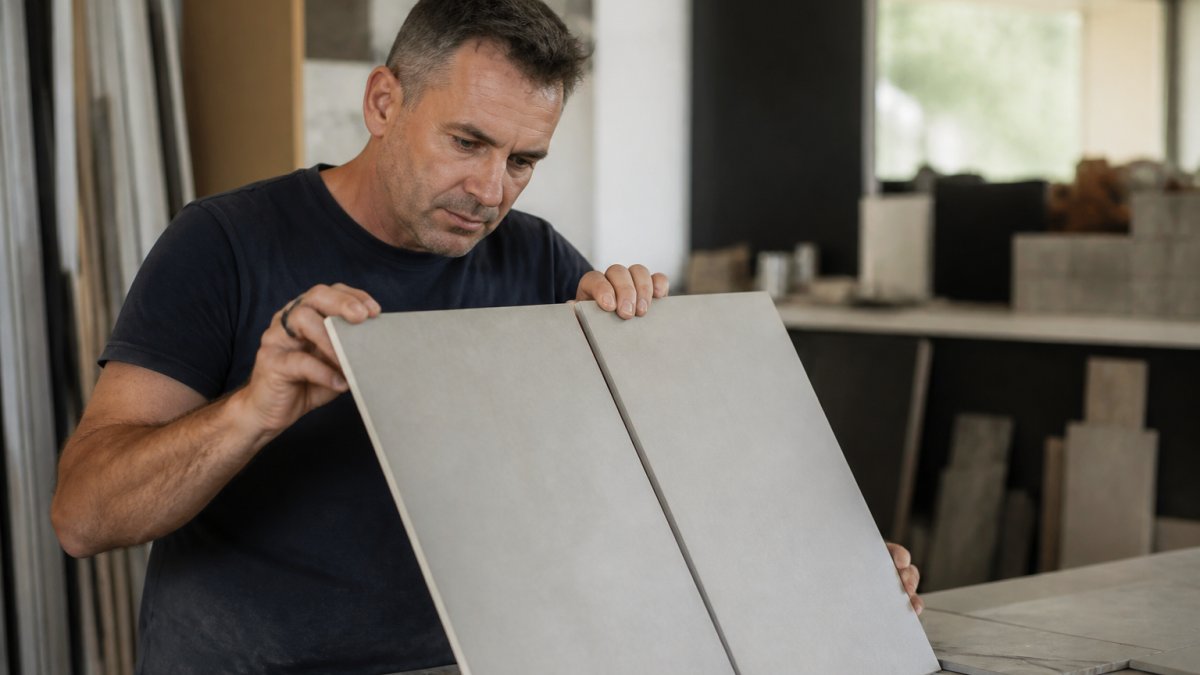
Start with the surface. Look along the face of the tile at a low angle under good light. You’re checking for bowing, dents, and pinholes in the glaze.
Then stand two tiles face to face. Any rocking means one or both are warped. Run a finger along the edges to feel for chips, and check that corners meet cleanly.
Water absorption and body type
Water absorption is how much water a tile body takes in, expressed as a percentage. Lower absorption generally means a denser, tougher tile.
- Porcelain usually has very low absorption, which suits bathrooms, floors and outdoor use.
- Ceramic absorbs more, which is fine for wall tiles in dry areas.
- Natural stone like travertine is porous and needs sealing and specific care.
Ask for the absorption figure or the body type in writing. If a listing won’t tell you, treat that as a warning sign.
Tile Grading and Calibre Explained
Tile grading and calibre are the two numbers most buyers ignore, and both affect how the finished job looks. Grading describes the visual quality band a tile is sorted into. Calibre describes its actual size within that band. Understanding these technical specifications is essential for choosing quality products when navigating the complexities of the modern digital marketplace.
A “first grade” or “first quality” tile should have no visible defects that affect appearance or performance. Second grades may carry minor cosmetic flaws, and sellers should say so clearly.
Calibre matters more than people expect. Two tiles sold as the same size can differ by a millimetre or two. On a large floor, small differences add up to visible lippage and uneven grout lines.
Always check that the calibre printed on each box matches. Mixing calibres in one room is a common and avoidable mistake.
When you collect or accept delivery, read the calibre number on every box before you start laying. If two boxes differ, set them aside and query it before any adhesive is mixed.
Tile Batch and Shade Variation: Why Two Boxes Can Differ
Shade variation is the natural difference in colour and pattern between tiles from different production runs. It’s normal, and it’s why batch numbers exist.
Every box carries a batch or shade code. Tiles from the same batch are made together and should match closely. Tiles from different batches can differ enough to notice, especially on large floors and in strong natural light.
This is a real risk when buying online or when stock is topped up later. If you order more tiles mid-project and they come from a new batch, the join can show.
- Order enough to cover the whole job plus a margin for cuts and breakages
- Record the batch code before you start
- Keep spare tiles from the same batch for future repairs
- Confirm current stock and batch availability with the seller before you rely on a top-up
How much spare to buy depends on your layout, not a fixed rule. A simple square room wastes less than a diagonal or herringbone pattern. Work out your area, then add a margin based on how many cuts your layout needs. A tiler can help you estimate this properly.
What to Check When Buying Tiles Online
Buying tiles online is fine if you check the details a photo can’t show. Screens represent colour differently, so treat images as a guide, not a match.
Before you order, confirm:
- The exact size and calibre, not just the nominal size
- Body type and water absorption figure
- The slip resistance rating and where the tile is rated for use
- Whether the price is per tile or per square metre
- Current stock levels and the batch you’ll receive
- Delivery terms, including who unloads and any access limits
Slip resistance and waterproofing suitability depend on the product, the location, and the applicable requirements. No single rating suits every space. Ask the manufacturer or a qualified professional to confirm what’s appropriate for your project.
Where possible, view a sample or visit a showroom before committing to a large order. Seeing the tile in person removes most of the guesswork.
Benefits and Drawbacks of Factory Direct Tiles
Factory direct buying has clear upsides, and a few trade-offs worth knowing before you commit.
The benefits:
- Lower pricing by removing layers between maker and buyer
- Access to many styles and sizes
- Direct advice on specifications and suitable applications
- Good value when you buy the right batch in the right quantity
The drawbacks:
- You must do more of the checking yourself
- Stock and batch availability can change between orders
- Online colour can differ from the real tile
- Returns and top-ups depend on current stock, so confirm terms first
At Bargain Factory Tile Outlet, our Campbelltown showroom lets you inspect tiles and check specifications before you buy. You can browse the range online, then visit to compare finishes and confirm details in person. Prices, stock, specifications and delivery terms are on the current product pages.
The most common mistake is ordering exactly the area you measured with no margin and no batch check. If a tile breaks or a box arrives damaged, a top-up from a new batch may not match. Order your margin up front and record the batch code.
Pricing depends on the tile, quantity and delivery, so check the website or ask in store for current figures rather than relying on old quotes.
Conclusion
The real challenge with factory direct tiles isn’t quality, it’s verification. You have to check the body type, grading, calibre and batch yourself, because no sales channel does that for you.
That’s where we can help. Bargain Factory Tile Outlet offers factory-direct pricing, a 1,000 m² Campbelltown showroom for inspecting tiles in person, and straight advice on specifications and suitable applications. Browse the range online, confirm current prices and stock, then visit us to choose with confidence. Get directions to the showroom and see the tiles for yourself.
Frequently Asked Questions
Are factory direct tiles lower quality than tiles from a retailer?
Not automatically. A tile’s quality comes from its body material, wear resistance, dimensional accuracy and how well it is fired, not from the sales channel. Factory direct tiles can be excellent or ordinary, and the same is true of retail tiles. The practical approach is to judge the actual product: ask for the technical specification, check a sample in person and confirm the grade and calibre.
How can you check tile quality before buying?
Start with the specification sheet: body type, water absorption, wear resistance and slip rating. Then inspect a sample for flatness, straight edges, consistent size and an even glaze. Tap two tiles together and listen for a clear ring rather than a dull thud, which can suggest a flaw. Check that all boxes carry the same batch and calibre code. For floors and wet areas, confirm suitability for the specific location with the manufacturer or a qualified installer, because requirements vary by product and application.
Can tiles from different batches look different?
Yes. Shade and sizing can vary between production runs. Always check the batch code on each box and order enough to complete the job plus a waste allowance from the same batch. If you need to top up later, expect a possible shade difference. Keep a few spare tiles from the original batch for future repairs.
Should I order a tile sample before buying online?
A sample is the most reliable way to judge colour, texture and finish, because screen settings and lighting can change how a tile looks. Order a sample of the exact product, view it in the room where it will be installed and in daylight as well as artificial light. Confirm the batch and calibre on the sample match what you will receive. For large orders, ask the supplier to confirm current stock and specification before you commit.