
Last Updated: October 11, 2026
What Makes Floor Tiles Affordable Without Compromising Quality
Affordable floor tiles for home renovation don’t have to mean poor durability or limited aesthetics. The key difference between a budget tile and a premium one often comes down to manufacturing efficiency and direct pricing rather than fundamental quality. At Bargain Factory Tile Outlet, we help homeowners and tradespeople find durable, attractive floor tiles that deliver genuine value without breaking the budget.
A low purchase price does not by itself establish that a tile is suitable for a particular floor or renovation. The real question is whether the tile meets the performance requirements of your specific space. A budget ceramic tile in a standard size with a simple layout works well for bathroom floors, whilst porcelain offers practical durability for high-traffic kitchens. What matters is matching the material to the room’s demands, not chasing the cheapest option available.
The affordability sweet spot emerges when you understand what drives tile costs. Manufacturing at scale, stocking popular sizes and finishes, and selling direct to homeowners and tradespeople all reduce overhead. This is why factory-direct retailers can offer substantial savings compared to showroom markup pricing.
Start with floor-rated ceramic or porcelain in a standard size (like 300×300mm or 600×600mm) and simple layout. Popular formats have better stock availability and lower per-unit costs. Save custom cuts and specialist finishes for accent areas where they have visual impact.
Porcelain Tiles vs Ceramic Tiles: Which Offers Better Value
Porcelain tiles and ceramic tiles both serve affordable renovation budgets, but they perform differently depending on where you install them. Porcelain is denser and less porous than ceramic, making it more resistant to moisture and staining. Ceramic is softer, easier to cut, and typically costs less upfront.
For kitchens, porcelain’s stain resistance and durability justify the slightly higher cost. For bathrooms with good ventilation, ceramic works well at a lower price point. The choice depends on your specific room conditions and how much foot traffic the floor will receive.
Porcelain also works outdoors where ceramic can crack from freeze-thaw cycles, though suitability depends on the product, location and applicable requirements. Always consult the manufacturer’s specifications and a qualified installer to confirm outdoor use is appropriate for your climate and installation method.
Ceramic remains the more budget-friendly option per square metre, making it ideal for larger areas where cost per unit matters. Porcelain’s longevity can deliver better long-term value despite higher initial outlay, especially in demanding environments.
Ceramic suits lower-traffic bathrooms and budget-conscious projects. Porcelain suits kitchens, outdoor areas, and spaces where durability justifies the extra cost.
Floor Tiles for Kitchens and Bathrooms: Choosing the Right Material
Kitchen Floors: Durability and Stain Resistance
Kitchen floors endure spills, heat, and constant foot traffic. Porcelain’s non-porous surface resists staining from cooking oils, wine, and coffee. Glazed finishes add another layer of protection against marks and moisture absorption.
Matt finishes hide fingerprints and dust better than glossy ones, though glossy tiles are easier to clean. A textured or slightly slip-resistant finish is practical near cooking areas and sinks without being unsafe underfoot.
Grout colour matters in kitchens. Darker grout hides stains better than light grout, reducing the appearance of dirt between tiles over time. This is a practical consideration that affects how much maintenance the floor requires.
Bathroom Floors: Moisture and Slip Considerations
Bathroom floors must handle moisture without becoming slippery hazards. Both ceramic and porcelain work here, but slip resistance is critical. Suitability depends on the product, location and applicable requirements; consult a qualified professional to confirm the tile’s slip rating suits your bathroom layout and use.
Unglazed or textured finishes provide better grip than polished surfaces. Mosaic tiles and smaller formats naturally offer more grout lines, which can improve slip resistance, though they require more maintenance.
Moisture resistance comes from the tile itself, not just the glaze. Porcelain’s density makes it inherently more resistant to water absorption. In areas prone to standing water or high humidity, porcelain is the safer choice despite higher cost.
How to Calculate Floor Tiles Needed for Your Project
Calculating tile quantity requires measuring your floor area and accounting for waste. This prevents mid-project stock shortages and helps you budget accurately.
Step 1: Measure your floor length and width in metres. Multiply these figures to get total area. For example, a kitchen that is 4 metres long and 3 metres wide equals 12 square metres.
Step 2: Determine your tile size. Tiles are sold in square metres, so a 300×300mm tile covers 0.09 square metres per tile. A 600×600mm tile covers 0.36 square metres per tile.
Step 3: Add waste allowance. Waste allowances depend on layout and project complexity, not a universal rule. A simple straight layout might need 5-10% extra; diagonal patterns or intricate designs can require 15-20% or more. Consult your installer or tile supplier about the appropriate allowance for your specific layout.
Worked example: For a 12 square metre kitchen using 600×600mm tiles with a 10% waste allowance:
- Base requirement: 12 ÷ 0.36 = 33.3 tiles
- Add 10% waste: 33.3 × 1.10 = 36.6 tiles
- Order: 37 tiles (rounding up)
Always order slightly more than your calculation suggests. Leftover tiles are useful for future repairs, and running short mid-project can cause delays.
Budget Tile Options: Comparing Materials and Finishes
Standard Ceramic and Porcelain Ranges
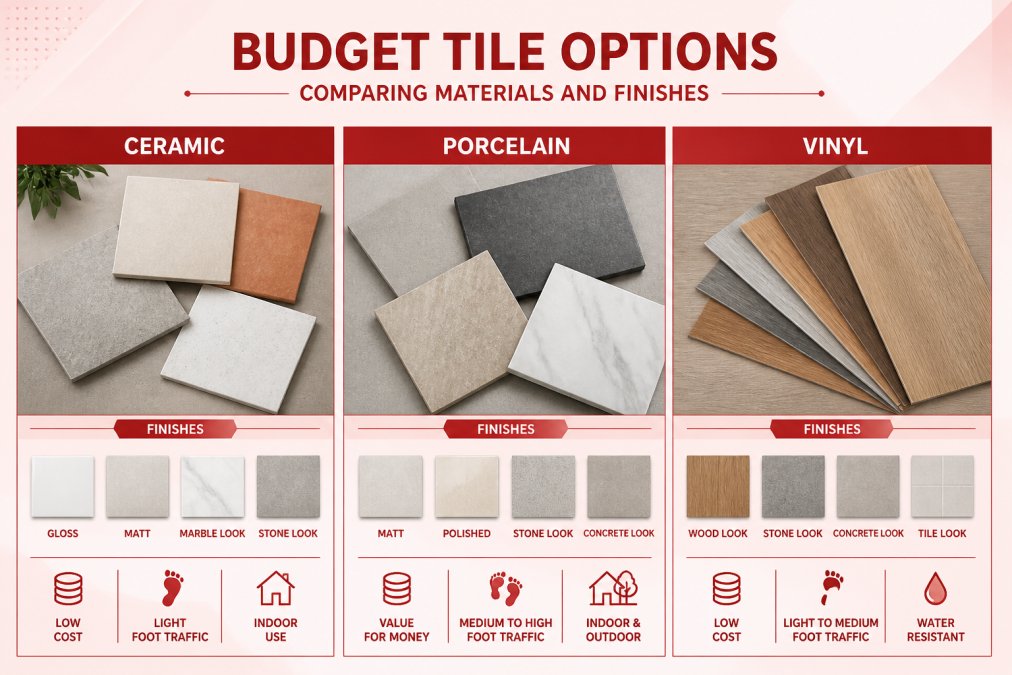
Standard ceramic and porcelain tiles in common sizes offer the best value for large-area renovations. Manufacturers produce these in volume, which reduces per-unit cost significantly. Popular finishes like matt, satin gloss, and textured surfaces are readily available and competitively priced.
Ceramic tiles in standard formats cost less than porcelain equivalents. They work well for bathrooms, laundries, and lower-traffic areas. Porcelain in standard ranges costs more but delivers superior durability for kitchens and outdoor spaces.
Glazed finishes add protection and visual appeal without substantial cost increases. The glaze seals the tile surface, improving stain and moisture resistance on both ceramic and porcelain.
Vinyl and Hybrid Alternatives
Vinyl and hybrid tiles offer budget-friendly alternatives to traditional ceramic and porcelain. Luxury vinyl plank (LVP) and vinyl sheet flooring mimic tile appearance at lower cost and are easier to install, though they are not true tiles. Selecting these synthetic materials often aligns with broader efforts to prioritise sustainability, providing a practical starting point for those planning eco-friendly home updates.
Hybrid tiles blend vinyl and stone, offering durability with easier installation than ceramic. They work well in moisture-prone areas and are gentler on feet than hard tiles.
These alternatives suit renovation budgets where installation speed and cost matter. However, they may not suit all design preferences or long-term durability expectations. Traditional ceramic and porcelain remain the standard choice for permanent installations.
Maintenance and Long-Term Value of Affordable Tiles
Affordable tiles deliver long-term value when you understand their maintenance needs. Ceramic and porcelain require regular cleaning and occasional grout maintenance but are inherently durable.
Glazed finishes simplify cleaning. Wipe spills promptly and clean with pH-neutral tile cleaner to avoid damaging the glaze. Avoid acidic cleaners that can etch the surface over time.
Grout maintenance is where most tile floors require ongoing attention. Porous grout absorbs stains and moisture. Sealing grout after installation protects it and makes cleaning easier. Re-seal every 1-3 years depending on traffic and moisture exposure.
Natural stone tiles like travertine require different care than ceramic or porcelain. They are softer and more porous, needing specialised sealers and gentler cleaning methods. Budget accordingly if you choose natural stone alternatives.
Vinyl and hybrid tiles require less intensive maintenance but may need replacement sooner than ceramic or porcelain in high-traffic areas. The lower upfront cost can offset shorter lifespan in some renovation scenarios.
Avoid acidic or abrasive cleaners on glazed tiles, they can dull the finish. Use pH-neutral cleaners and reseal grout regularly to prevent staining and moisture damage. Failure to maintain grout leads to water infiltration and potential structural issues beneath the tiles.
Common Mistakes to Avoid When Buying Budget Floor Tiles
Choosing tiles by price alone often leads to regret. A tile that is cheap per square metre but unsuitable for your space creates costly problems. Always verify that the tile’s performance rating matches your intended use before purchasing.
Underestimating waste is a common and expensive mistake. Running short mid-project can cause delays. Order extra tiles; leftover stock is valuable for future repairs.
Ignoring grout and adhesive costs skews your budget. Quality grout and adhesive are not areas to cut costs. Poor adhesive application or unsuitable grout leads to tile failure, cracking, and water damage that costs far more to repair than the savings on materials.
Mixing tile formats mid-project creates visual inconsistency and complicates installation. Stick to one tile size and finish for the main floor area. Use contrasting tiles strategically for borders or accents rather than mixing throughout.
Assuming all “affordable” tiles are the same quality is misleading. Research product reviews and ask suppliers about durability ratings. A slightly higher-priced tile with better slip resistance or stain resistance often delivers better long-term value.
Frequently Asked Questions
What is the most affordable type of floor tile?
Standard ceramic tiles in common sizes offer the best value for budget-conscious renovations. They cost less than porcelain and are suitable for most indoor applications. Porcelain tiles, whilst more durable, command higher prices. Vinyl and hybrid alternatives can compete on cost but depend on your specific needs. Visit our showroom to compare options and find tiles that balance affordability with performance for your project.
Are ceramic or porcelain tiles better value for a home renovation?
Ceramic tiles are cheaper upfront, making them ideal for tight budgets and standard indoor use. Porcelain costs more but lasts longer in high-traffic areas and handles moisture better, so it may deliver better value over time if durability mattrs. For kitchens and bathrooms, porcelain often justifies its cost through longevity. The right choice depends on your room, budget and how long you plan to stay in your home.
How many extra tiles should I allow for cuts and breakages?
Most projects need 5-10% extra tiles beyond your calculated area. Simple layouts with few cuts require 5%; complex designs, large rooms or intricate patterns need 10%. For example, a 10 m² bathroom with a straightforward layout would need approximately 0.5-1 m² extra. Always check with your installer or supplier about the specific layout, as waste varies significantly with tile size, room shape and design complexity.
What should I compare when choosing budget floor tiles?
Compare durability (ceramic vs porcelain), water resistance for wet areas, surface finish (matt is less slippery than gloss), size and layout complexity, and maintenance requirements. Larger tiles mean fewer grout lines and easier cleaning but require a flatter subfloor. Check slip ratings if safety is a concern. Visit our Campbelltown showroom to see samples in person and discuss which tiles suit your specific room and budget.
Affordable floor tiles for home renovation are achievable when you match materials to your specific space and understand what drives durability. At Bargain Factory Tile Outlet, we stock a wide range of ceramic, porcelain, and alternative tiles at factory-direct prices. Visit our Campbelltown showroom or browse our online collection to find the right tiles for your project. Our team can advise on suitability, help calculate quantities, and discuss delivery options for your renovation.